Gardening

Building a Backyard Food Forest One Harvest at a Time

When I first started gardening, my goal was simple: grow some of my own food.

Over time, that vision has expanded. What began as a few vegetables has slowly evolved into something much biggerโ€”a small backyard ecosystem filled with food, flowers, pollinators, and the promise of future harvests.

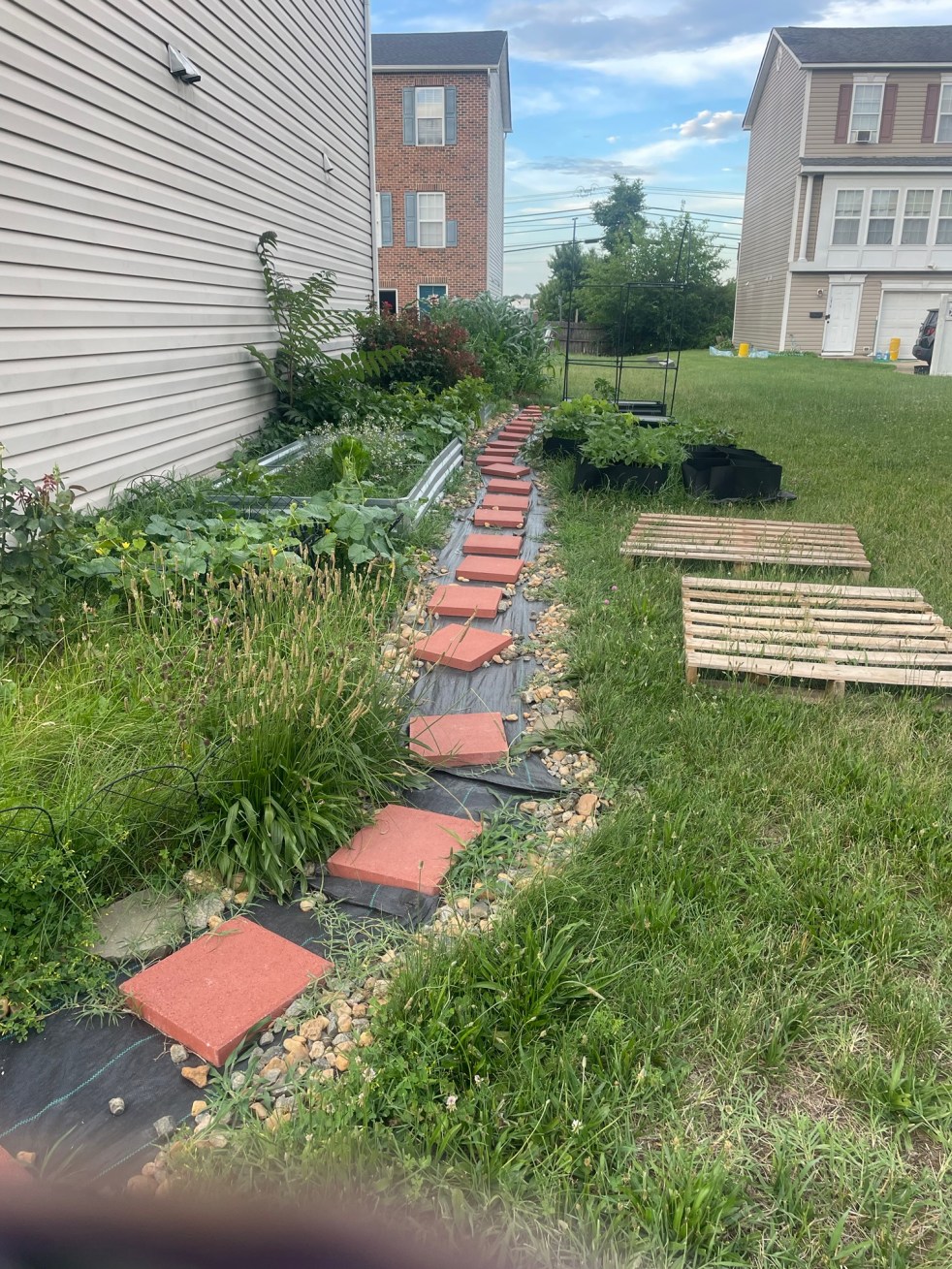
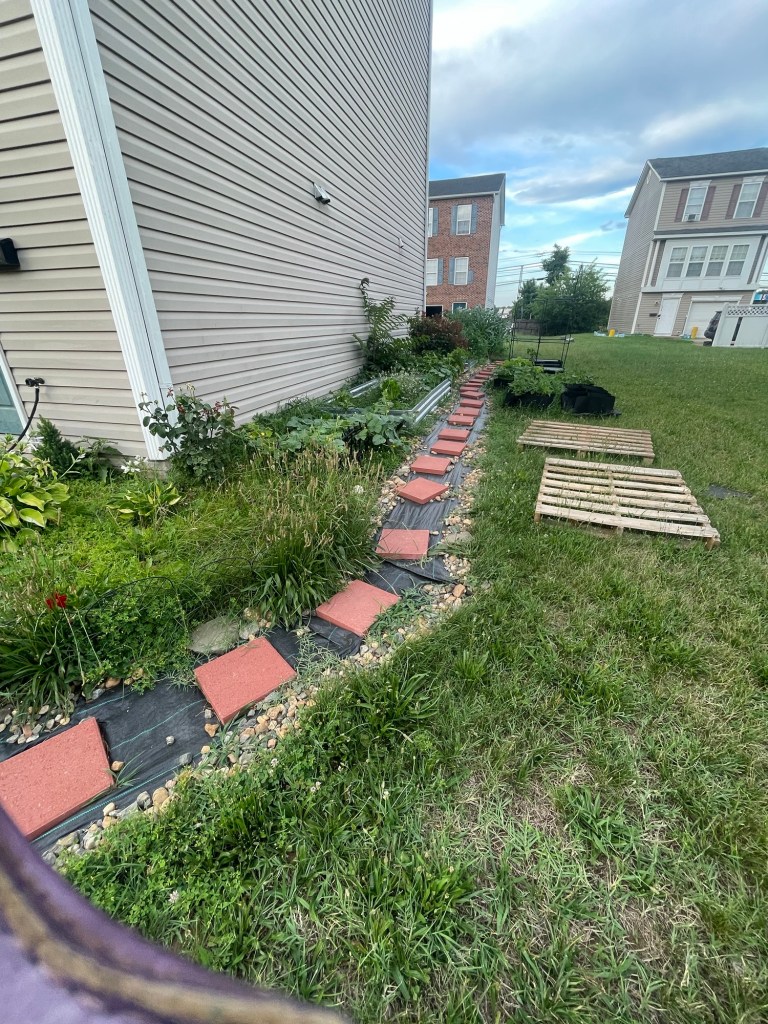
This week, I spent some time walking through the garden and reflecting on how much progress has been made. Looking at the pathway, the raised beds, and the growing plants, I can finally begin to see the vision coming together.

Harvesting From the Garden
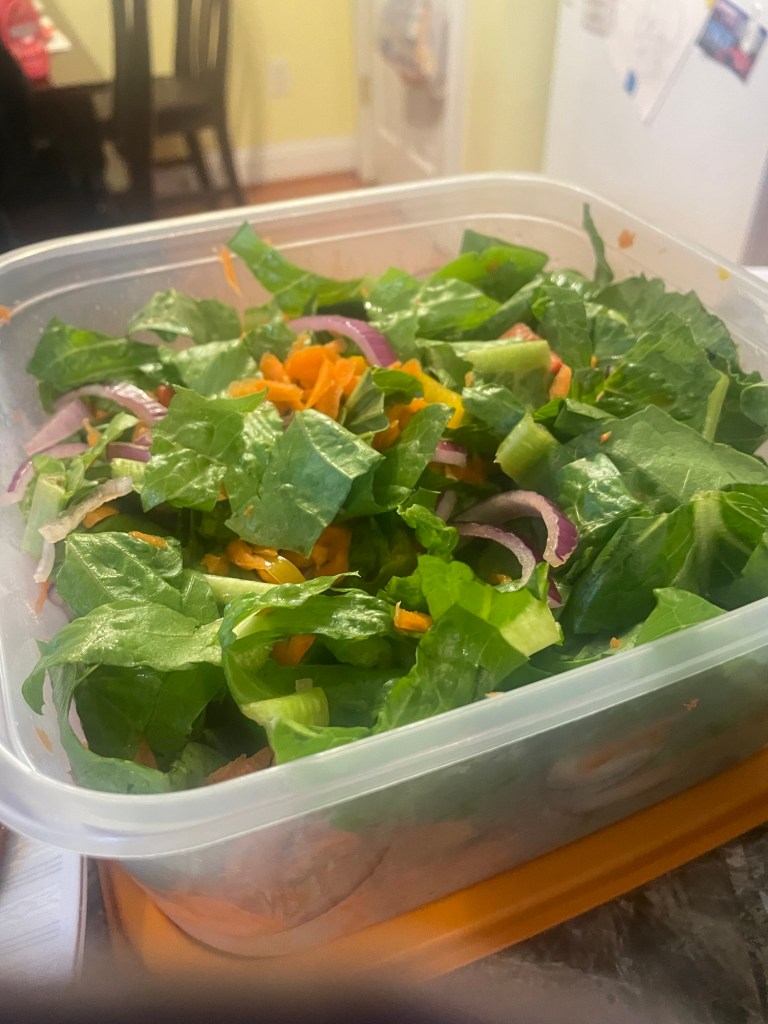
One of the greatest joys of gardening is bringing fresh food directly from the garden to the kitchen.

Recently, I harvested sweet potato greens and used them in meals for my family. Sweet potato leaves are one of my favorite garden crops because they are nutritious, productive, and often overlooked by many gardeners.

I also harvested fresh greens that became a colorful salad filled with garden-fresh ingredients. There is something incredibly satisfying about preparing food that was growing just a few feet from your back door only hours earlier.

Every harvest, no matter how small, feels like a victory.
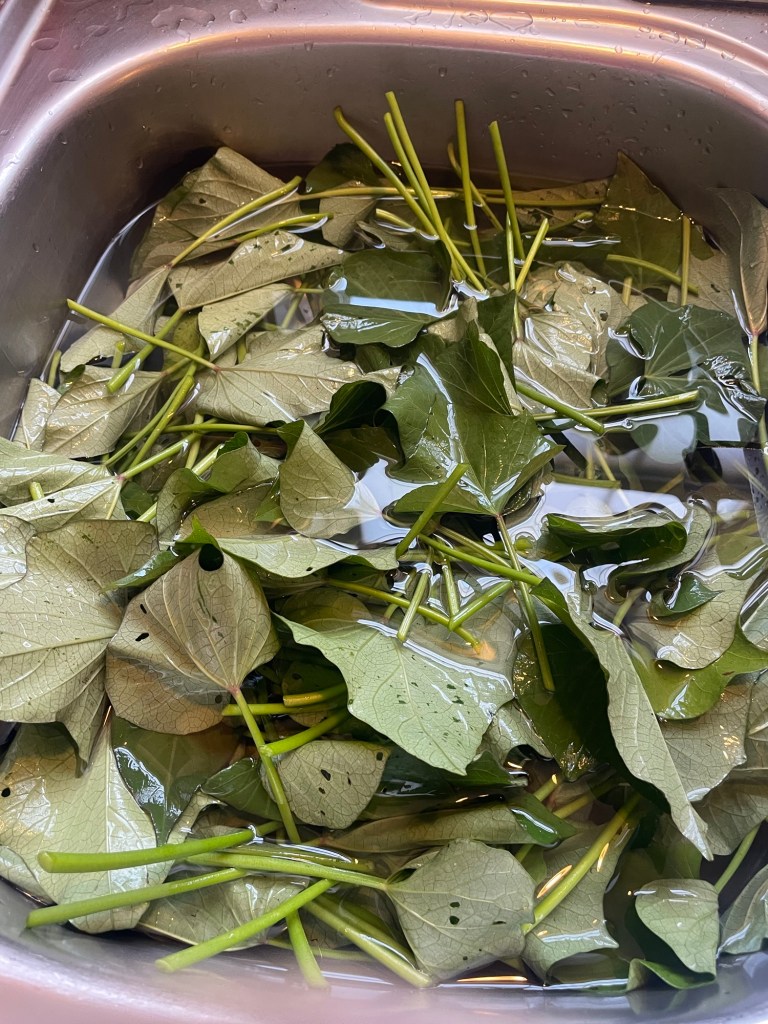
Before making their way to the table, the sweet potato leaves were carefully washed and prepared. One thing I love about growing food is reconnecting with the process from garden to plate.
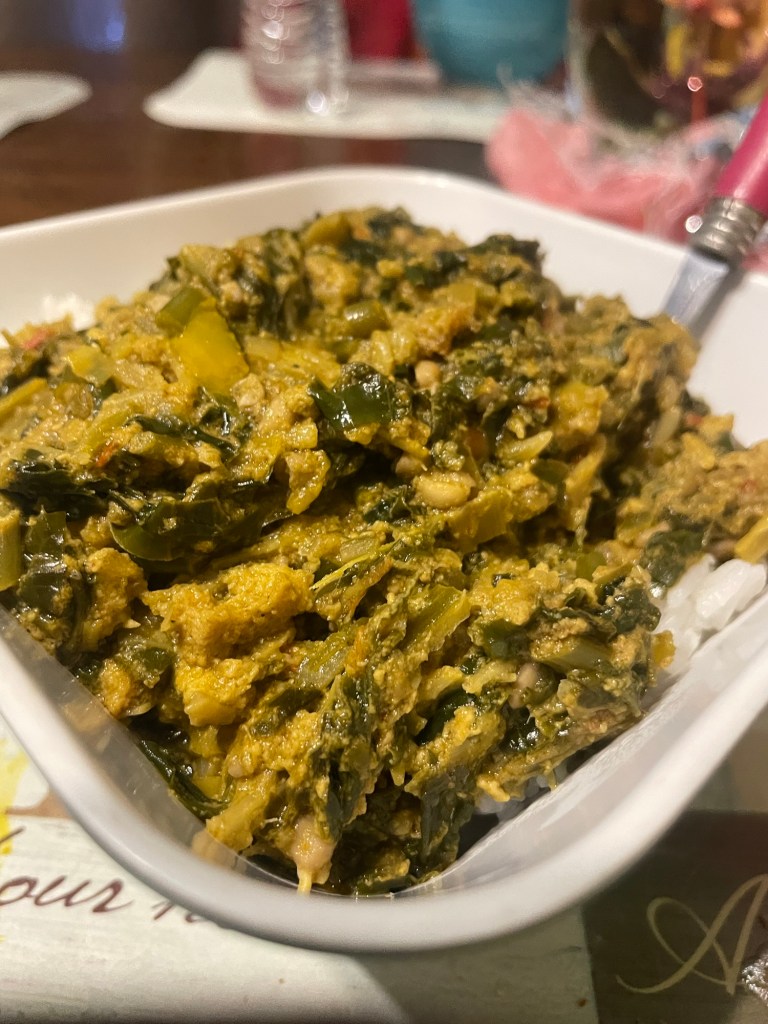
The finished dish was simple, nutritious, and made almost entirely from ingredients grown at home.

Whatโ€™s Thriving

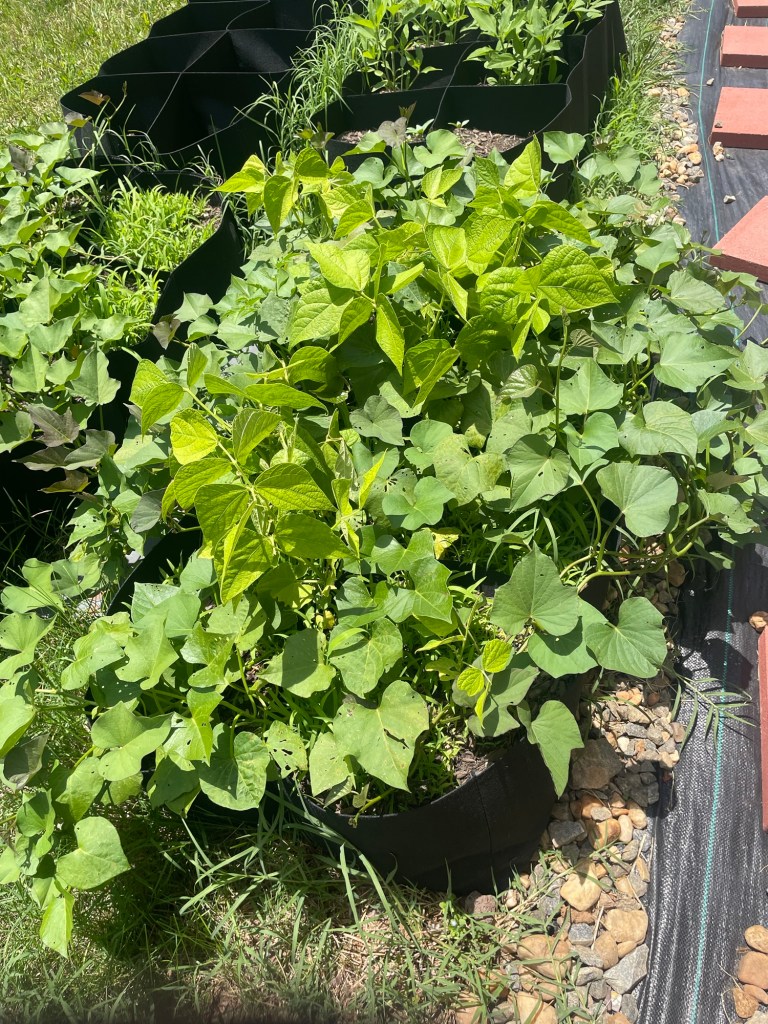
The sweet potatoes have completely taken off this season. Their vines are lush, vigorous, and filling the grow bags with beautiful green growth.
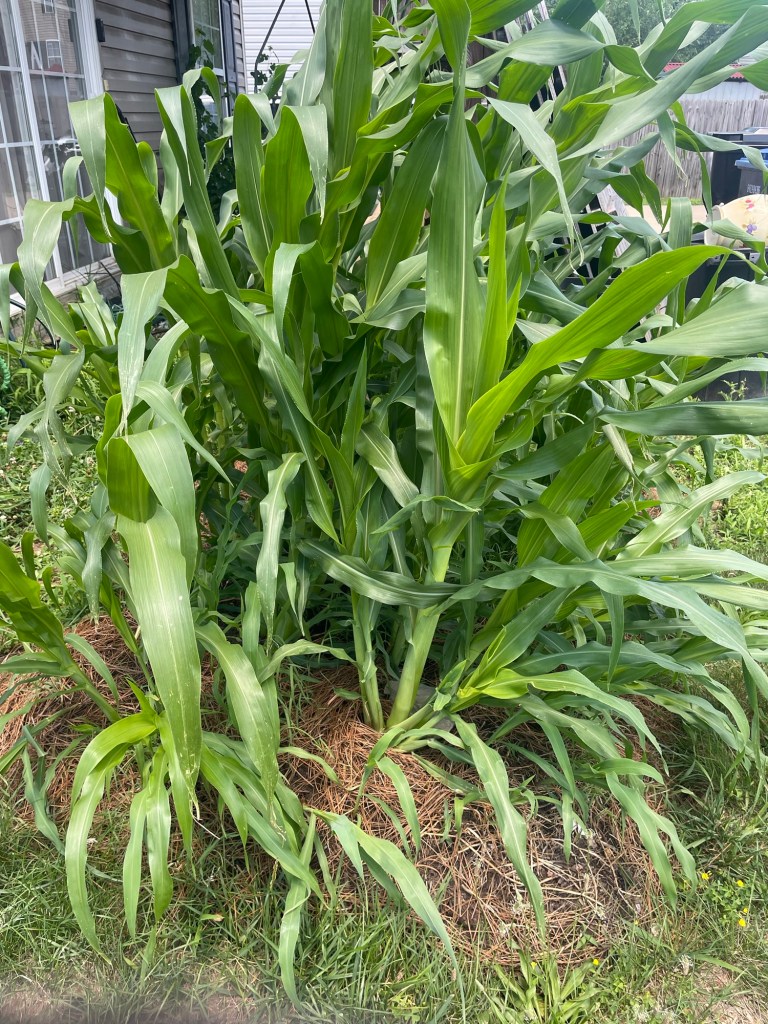
The corn has become one of the most impressive features in the garden. Every week it seems taller than the last, creating a living wall of green that reminds me how quickly summer arrives.
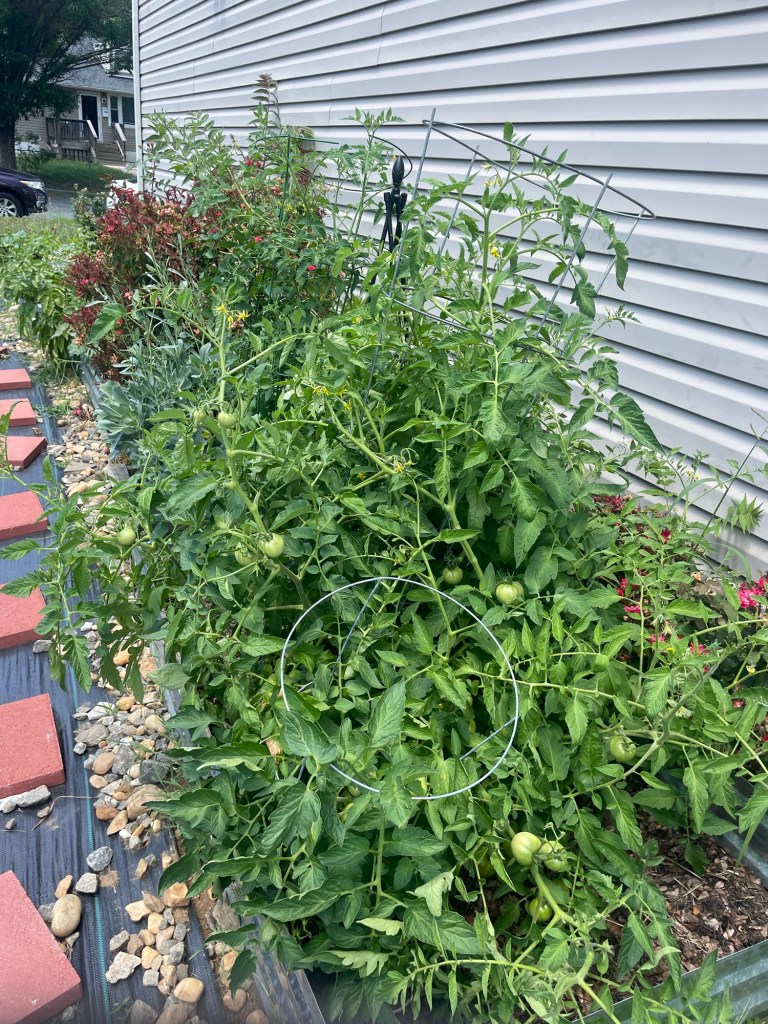
The tomatoes are loaded with developing fruit and continue to grow vigorously. Seeing clusters of tomatoes forming is one of those moments that makes all the watering, pruning, and patience worthwhile.
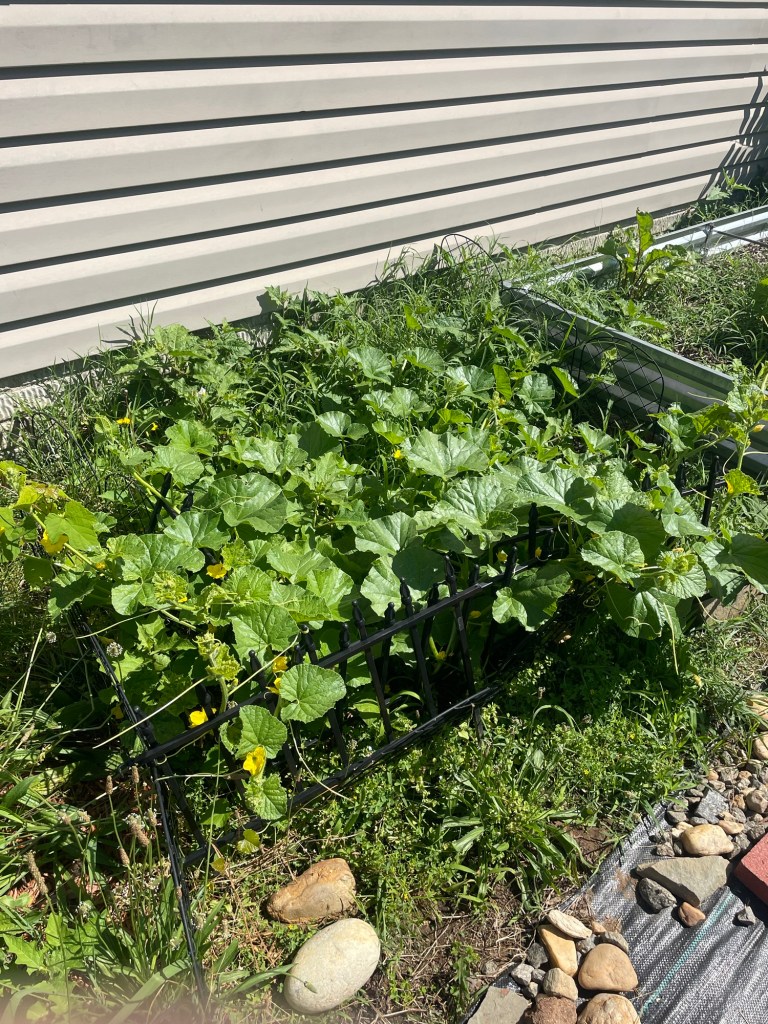
The cucumber vines are spreading throughout the bed and producing beautiful yellow blossoms that promise future harvests.

More Than Vegetables
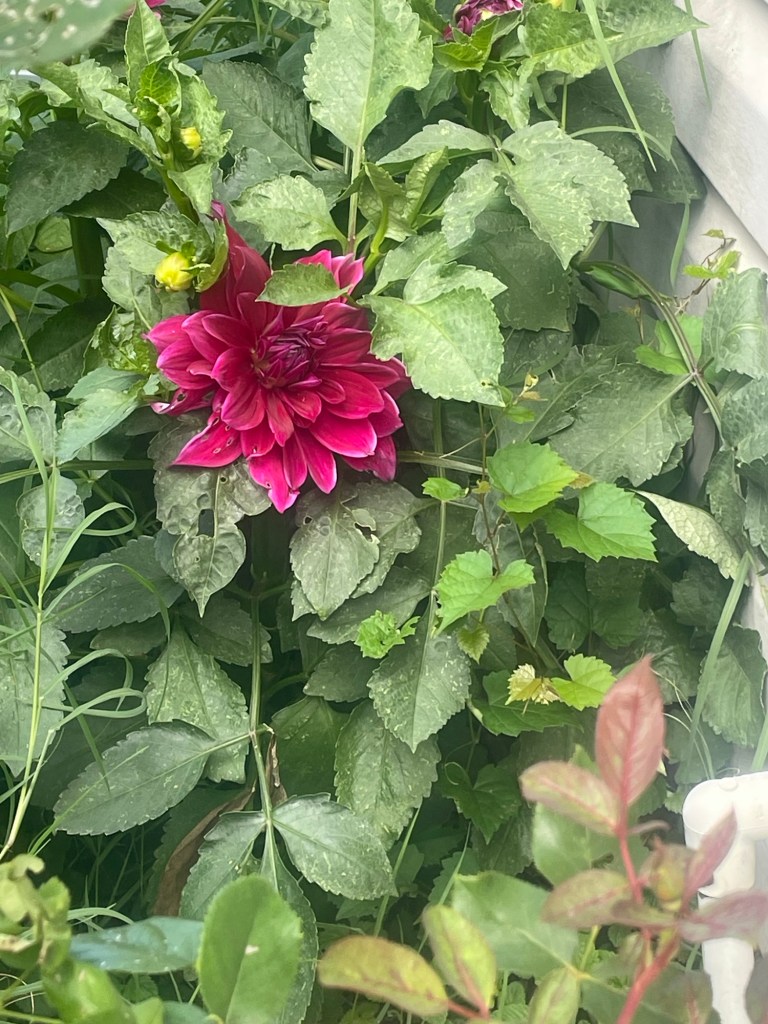
One of my favorite flowers in the garden recently openedโ€”a stunning dahlia bloom that added a burst of color among all the shades of green.

Flowers are just as important to me as vegetables. They attract pollinators, support biodiversity, and remind me that a garden should nourish the spirit as much as it nourishes the body.

Over the years, Iโ€™ve found that gardening isnโ€™t only about producing food. Itโ€™s also about creating beauty, building habitat, and finding moments of peace in the middle of everyday life.

Lessons From This Season

Gardening constantly teaches patience.

Some crops thrive immediately while others struggle. Some plans work exactly as expected, while others require adjustments along the way.

This season has reminded me that growth doesnโ€™t have to be perfect to be meaningful.

The pathway is still evolving. The garden layout continues to change. New projects are always waiting around the corner.

But when I look at the harvests coming into my kitchen and the life filling these garden beds, I can clearly see that progress is happening.

One plant, one harvest, and one season at a time.

Thank you for following along on this journey with me. I look forward to sharing more harvests, lessons, and garden adventures as the season continues.

Happy gardening,

Lulu
Health & Fitness

Healing Isnโ€™t Always About Recoveryโ€”Sometimes Itโ€™s About Discovery

For a long time, I thought healing meant getting back to who I was before the trauma.

I thought the goal was to recover the version of myself that existed before the disappointments, betrayals, losses, and difficult experiences that shaped my life.

But lately, Iโ€™ve been wondering if healing is something entirely different.

What if healing isnโ€™t about returning to who we were?

What if healing is about discovering who we have been all along?

A few days ago, I had a realization while talking with my children. They helped me see something I had never fully understood.

I have spent years believing there was something wrong with me.

Years believing I wasnโ€™t enough.

Years focusing on my flaws, mistakes, and shortcomings.

Yet the people who know me best saw something very different.

They saw beauty where I saw imperfections.

They saw strength where I saw weakness.

They saw resilience where I saw brokenness.

And it made me wonder how many of us are carrying stories about ourselves that are no longer true.

Trauma has a way of changing the lens through which we view our lives.

It can convince us that we are less capable than we really are.

Less lovable than we really are.

Less worthy than we really are.

The trauma happened.

The pain was real.

But the story we tell ourselves because of the trauma isnโ€™t always accurate.

Healing has taught me that growth doesnโ€™t always look dramatic.

Sometimes it looks like taking a walk when youโ€™d rather stay in bed.

Sometimes it looks like going for a run even when your pace is slower than youโ€™d like.

Sometimes it looks like planting a garden and trusting that something beautiful can grow from the soil.

Sometimes it looks like setting a boundary.

Sometimes it looks like asking for help.

And sometimes it looks like finally seeing yourself through kinder eyes.

The truth is that I am still healing.

I suspect I always will be.

But I no longer see healing as a process of fixing a broken person.

I see it as a process of uncovering the person who has been there all along beneath the fear, the pain, and the self-doubt.

That person is stronger than she realized.

More capable than she believed.

And perhaps even more beautiful than she allowed herself to see.

Maybe thatโ€™s what healing really is.

Not becoming someone new.

But finally meeting yourself.

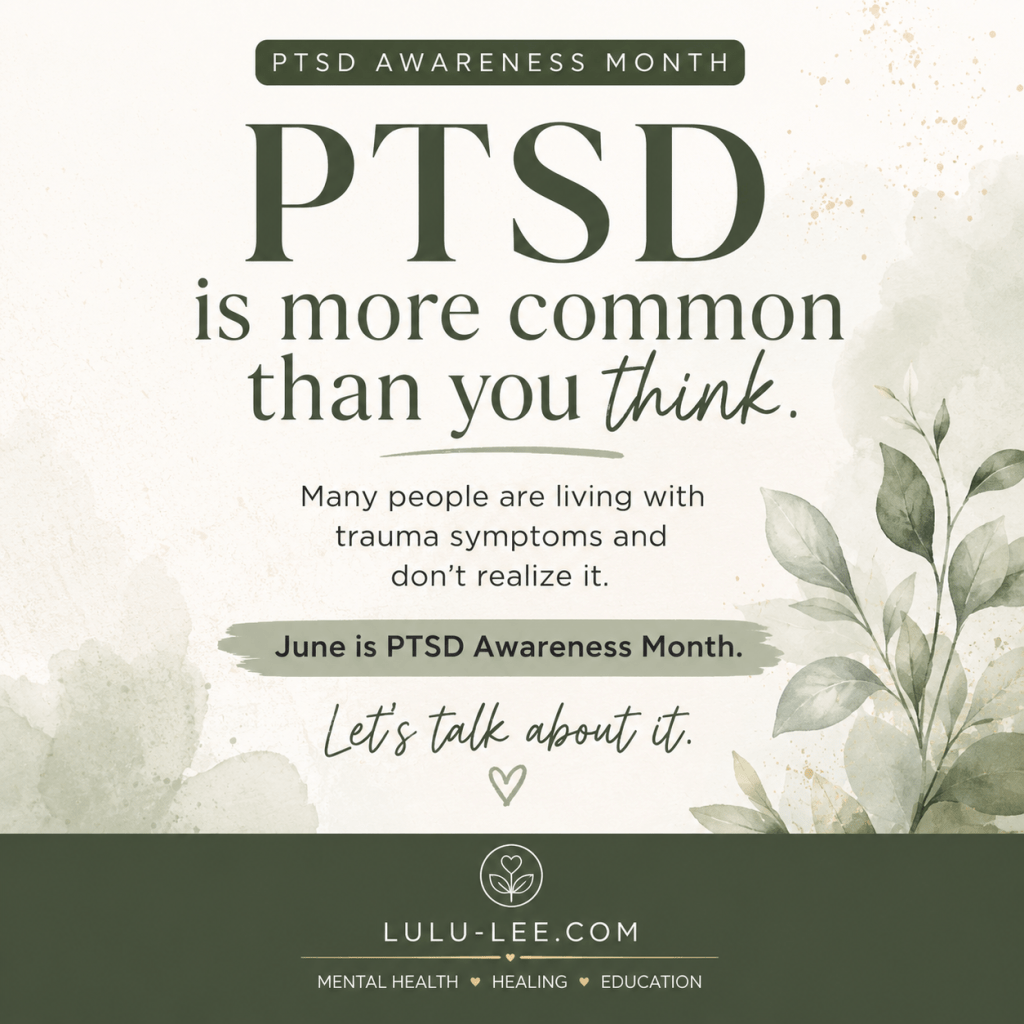
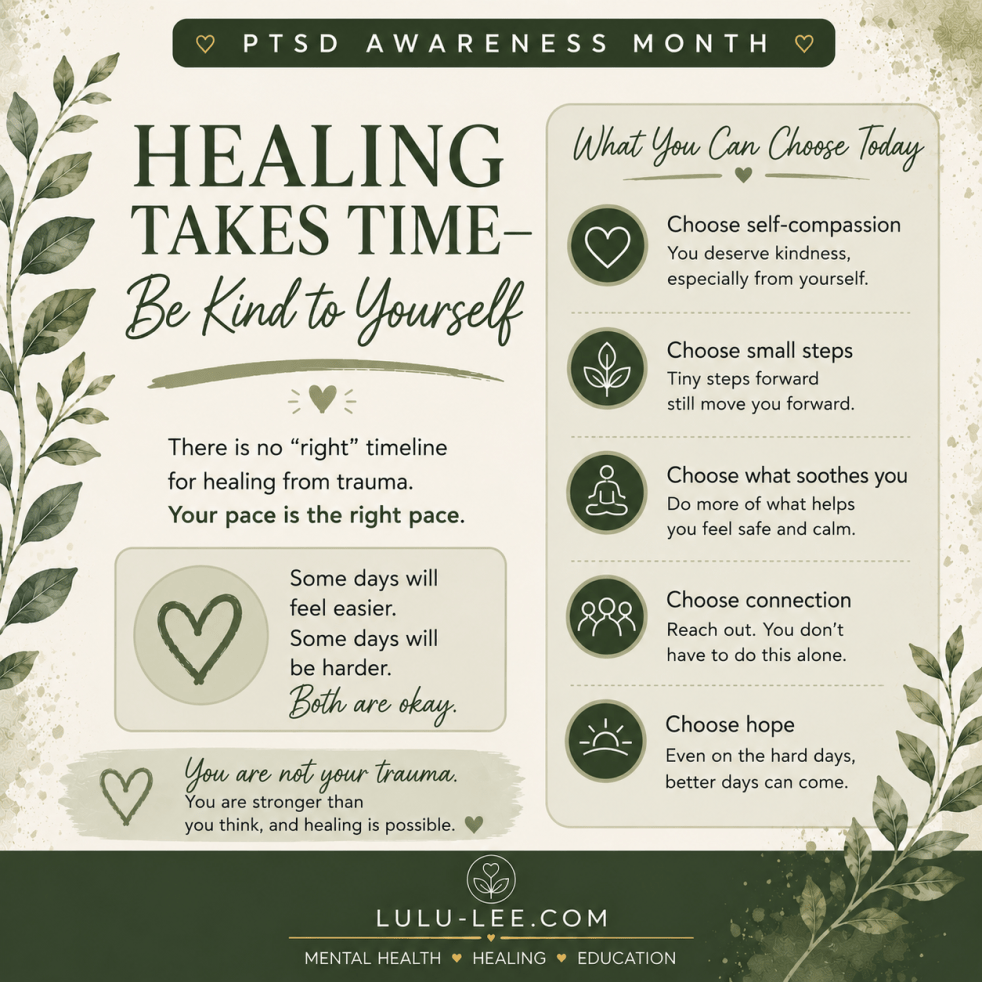
As we recognize PTSD Awareness Month, I hope we can expand the conversation beyond symptoms and diagnoses. Trauma affects real peopleโ€”people who are raising families, going to work, building gardens, pursuing dreams, and quietly carrying burdens that others may never see.

Healing is possible. Recovery is possible. And sometimes the most important discovery is realizing that you were never as broken as trauma led you to believe.

Reflection Question

Have you ever discovered that something you believed about yourself wasnโ€™t actually true?

Iโ€™d love to hear your thoughts in the comments.

Trauma has a way of changing the lens through which we view our lives.

PTSD is often misunderstood as something that only affects combat veterans, but trauma can result from many different experiences, including childhood adversity, domestic violence, neglect, medical trauma, accidents, or the loss of a loved one.

One of the most common trauma responses is hypervigilanceโ€”the feeling that you must constantly scan for danger even when you are safe. Another is the tendency to see yourself through the lens of survival rather than through the lens of your strengths.

Trauma changes the brain and the body. It can affect sleep, relationships, self-esteem, and even physical health. These responses are not signs of weakness. They are signs that your nervous system learned to protect you.

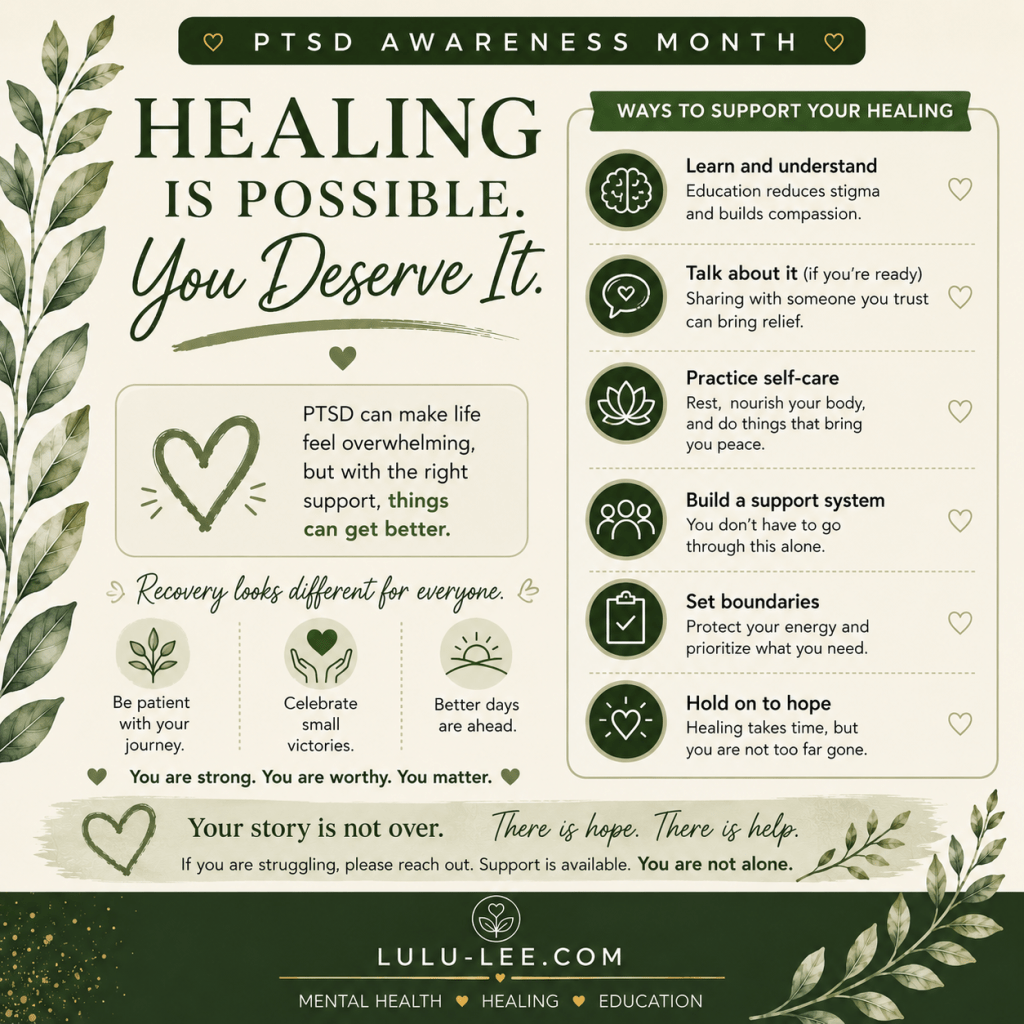
The good news is that healing is possible.

Healing may involve therapy, supportive relationships, movement, mindfulness practices, healthy boundaries, and learning to extend compassion toward yourself.

There is no โ€œrightโ€ timeline for healing. Your pace is the right pace.

Recipes

Sunday Lasagna and a Garden-Fresh Salad

After working all night, I came home this morning feeling tired but determined to make something special for my family.

I havenโ€™t been eating much meat these days, but my family loves my homemade lasagna. It had been months since I last made it, and for some reason, today felt like the perfect day to bring it back to the table.

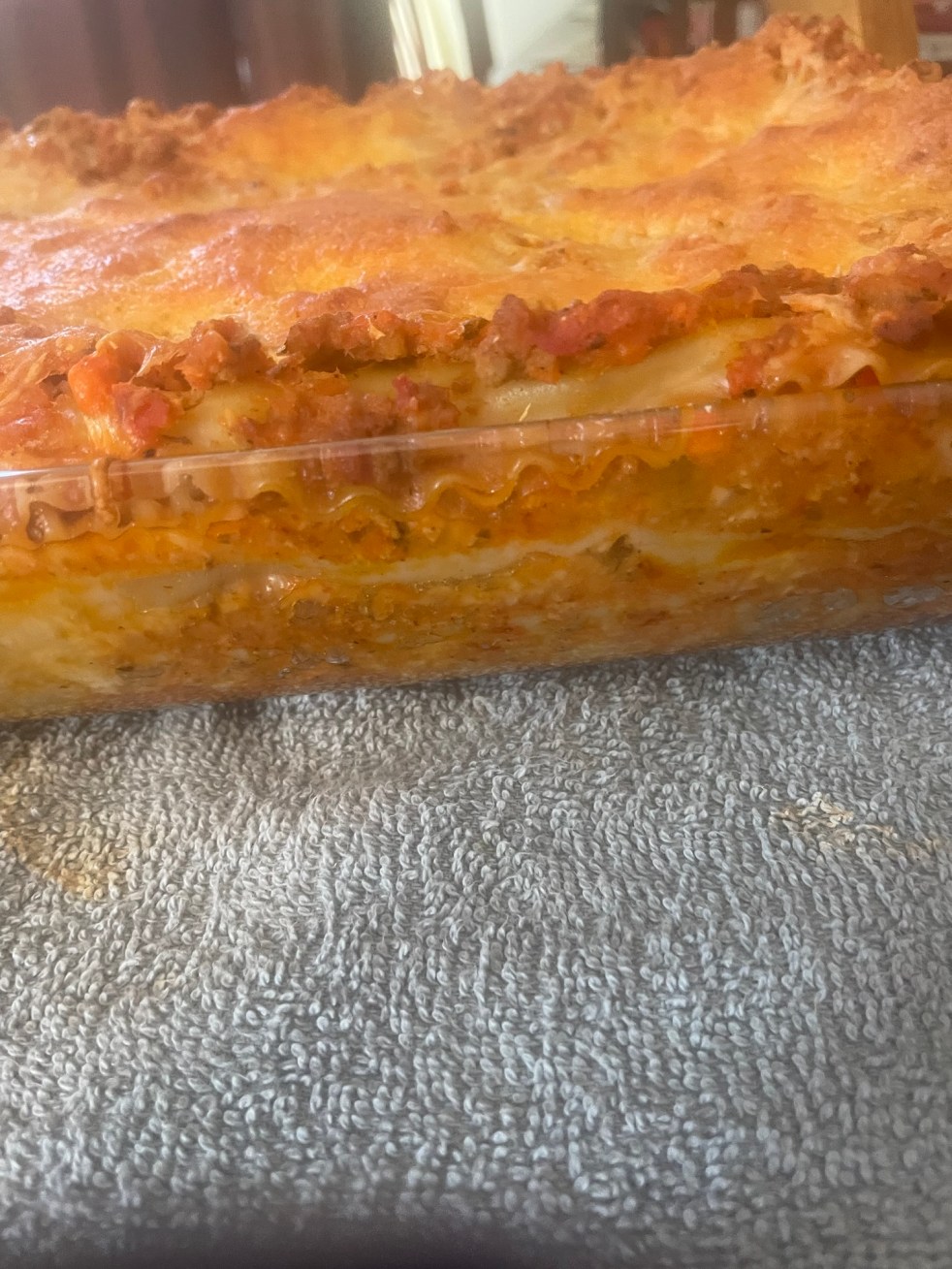
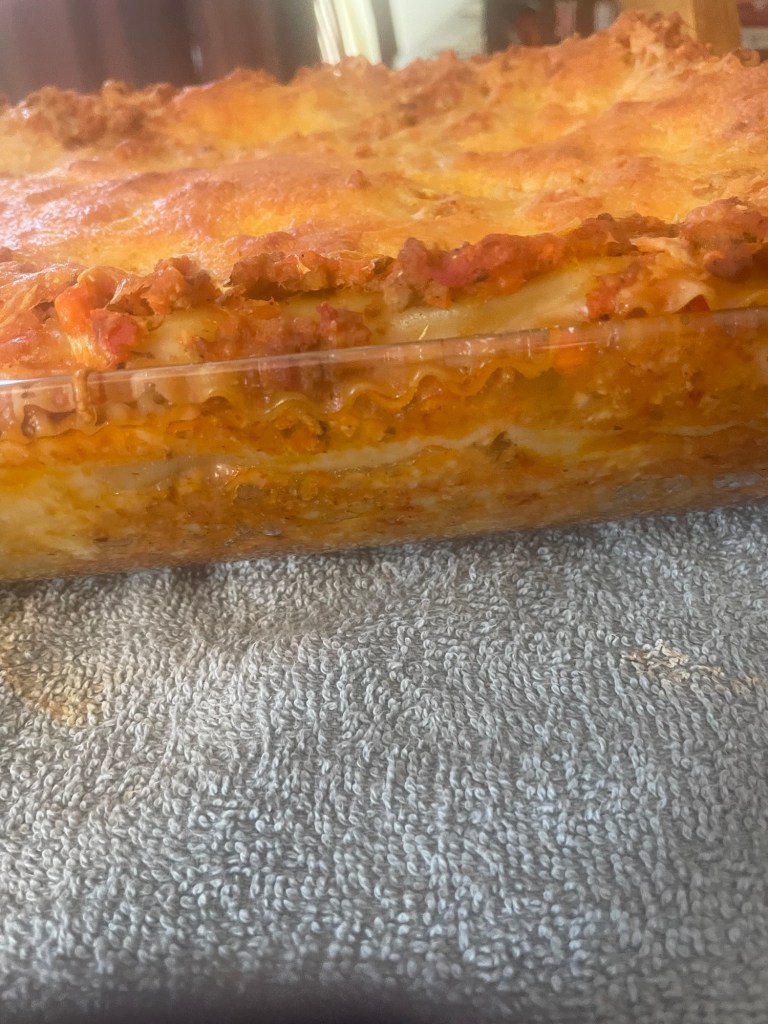
As soon as I got home, I started working on the sauce. I browned about half a pound of ground turkey and then turned my attention to the vegetables. I gathered one large bell pepper, five sweet peppers, two large onions, one steak tomato, and two carrots. After blending everything together, I added the vegetables to the turkey and let the mixture cook down into a rich and savory base.

Next came the seasonings.

If youโ€™ve been following my recipes for any length of time, you already know that I rarely measure anything. I cook the same way my mother and many home cooks before her didโ€”by instinct. A little ginger, basil, garlic, seasoned salt, and chicken bouillon found their way into the pot. There is no exact science behind it. I taste, adjust, and trust my senses.

After about fifteen minutes of cooking, I added a store-bought pasta sauce. Normally, I make my sauce from scratch, but after a long shift, convenience won the day. Sometimes good enough is exactly what we need.

I lowered the heat and let everything simmer together for another fifteen to twenty minutes while I prepared the rest of the ingredients.

The oven was preheated to 350 degrees, the baking dish was waiting on the counter, and three different cheeses were ready to go alongside the oven-ready lasagna noodles.

Then came my favorite part: assembling the layers.

Sauce.

Pasta.

Cheese.

Repeat.

There is something almost therapeutic about building a lasagna layer by layer. Maybe itโ€™s because you can already imagine the finished dish before it ever goes into the oven.

After forty-five minutes of baking, the house smelled amazing.

While the lasagna rested, I stepped outside and harvested fresh lettuce from the garden. I paired it with tomatoes, carrots, and baby spinach we already had on hand to create a simple side salad.

I had every intention of making a cheesy garlic bread to go alongside dinner, but by that point exhaustion had caught up with me. After being awake all night and spending the morning cooking, I decided the garlic bread could wait for another Sunday when I had a little more time and energy.

And honestly, that was okay.

Sometimes a meal doesnโ€™t have to be perfect to be meaningful.

Sometimes itโ€™s enough to gather around the table with the people you love, share a homemade meal, and enjoy the fruits of your laborโ€”whether they come from the garden, the grocery store, or a recipe youโ€™ve been making for years.

Todayโ€™s meal reminded me that caring for the people we love often happens in simple ways. A warm pan of lasagna. A fresh salad from the garden. A quiet afternoon after a long nightโ€™s work.

Those small acts of love matter more than we realize.

Book Club

From Family Stories to Fiction: Reimagining Mami Wata in the Tidewalker Series

One of the most rewarding parts of writing the Tidewalker series has been discovering how deeply stories, family history, and culture are connected.

As I continue working on Book Two, I have found myself returning to the stories I heard as a child about Mami Wata. Long before I began writing fiction, I remember listening to my aunt share tales about this mysterious water spirit. Like many stories passed down through generations, there was often an element of fear woven into them. Mami Wata was powerful, beautiful, unpredictable, and not always understood. Some stories portrayed her as a blessing, while others warned that she could bring misfortune.

One story in particular stayed with me for years. My aunt believed that Mami Wata had somehow cursed our family line. Whether she meant this literally or symbolically, I cannot say. What I do know is that many families carry stories like theseโ€”stories that attempt to explain hardship, loss, unusual gifts, or events that seem larger than life.

As an adult and as a writer, I have begun to view these stories differently.

Rather than seeing a curse, I find myself asking another question:

What if it was a calling?

That question became one of the inspirations behind the Tidewalker series.

The Real Mami Wata

Mami Wata is one of the most well-known spiritual figures throughout West and Central Africa. Her name is often translated as โ€œMother Water,โ€ and stories about her can be found across many cultures and countries. She is often depicted as a beautiful woman connected to rivers, oceans, wealth, healing, fertility, and spiritual power.

Like many ancient figures, Mami Wata is complex. She can represent both danger and blessing, temptation and transformation. Depending on the region and storyteller, her role changes. Some people view her as a protector. Others see her as a warning. Many traditions portray her as a bridge between the physical and spiritual worlds.

What fascinates me most is that Mami Wata is rarely simple. She exists in the space between certainty and mystery.

From Curse to Prophecy

As I developed the world of the Tidewalkers, I found myself moving away from the idea of a cursed bloodline.

Instead, I began imagining a family chosen for a purpose they did not fully understand.

In the story, Nโ€™Porehโ€™s family line is tied to an ancient prophecy that has been forgotten by most of the world. What many people interpret as misfortune, strangeness, or bad luck is actually the weight of a responsibility carried across generations.

The family is not being punished.

They are being prepared.

This shift changed everything for me.

A curse suggests hopelessness.

A prophecy suggests purpose.

A curse traps people in the past.

A prophecy calls them toward the future.

The more I thought about it, the more I realized this idea reflected something I have seen in real life. Families often inherit stories about what is wrong with them. We inherit narratives about failure, trauma, loss, or limitations. Yet sometimes those same experiences are preparing us to become something greater than we imagined.

A Personal Connection

While researching my own family history, I found myself thinking about my grandmother, Mโ€™Balu Sankoh, who was born in the Maforki region of Sierra Leone. I have spent time exploring the history of the area, learning about the Temne people, and tracing fragments of stories passed down through my family.

Like many people researching their ancestry, I have discovered that records often leave gaps. Names are forgotten. Villages change. Stories become fragmented over time.

Yet the stories remain.

Perhaps that is why storytelling matters so much.

Stories preserve what records cannot.

They carry memories, values, fears, hopes, and dreams across generations.

In many ways, the Tidewalker series has become my way of honoring those stories while imagining what might have been hidden between the lines.

Looking Ahead

As I continue writing Book Two, I am excited to explore the deeper connection between Nโ€™Poreh, Mami Wata, and the prophecy that binds both worlds together.

The story is becoming less about good versus evil and more about identity, destiny, sacrifice, and unity.

What if the things we fear most about our family history are not curses at all?

What if they are invitations?

What if the stories passed down through generations are not warnings about who we are destined to becomeโ€”but reminders of who we have always been?

That question continues to guide me as I write.

And perhaps it is the question at the heart of the Tidewalker series itself.

Authorโ€™s Note

The Tidewalker series is inspired by West African folklore, family stories, and my ongoing exploration of Sierra Leonean history and culture. While the story is fictional, many of its themesโ€”identity, belonging, ancestry, and healingโ€”are deeply personal. As I continue researching my familyโ€™s roots and writing Book Two, I find myself increasingly grateful for the storytellers who came before me and preserved pieces of history that might otherwise have been lost.

Gardening · Gardening

Garden Update: Some Wins, Some Lessons

This week in the garden has been a mix of encouragement and frustration. Some of my plants are thriving while others are clearly struggling, and honestly, I think the strange weather has a lot to do with it.

My spinach and okra have not been doing well at all. The spinach started bolting and looking stressed almost overnight, and the okra just seems unhappy no matter what I try. Between the random temperature swings, heavy rain, cooler nights, and sudden heat, I think the plants are having a hard time adjusting. Gardening really teaches patience because sometimes you can do everything โ€œrightโ€ and nature still has other plans.

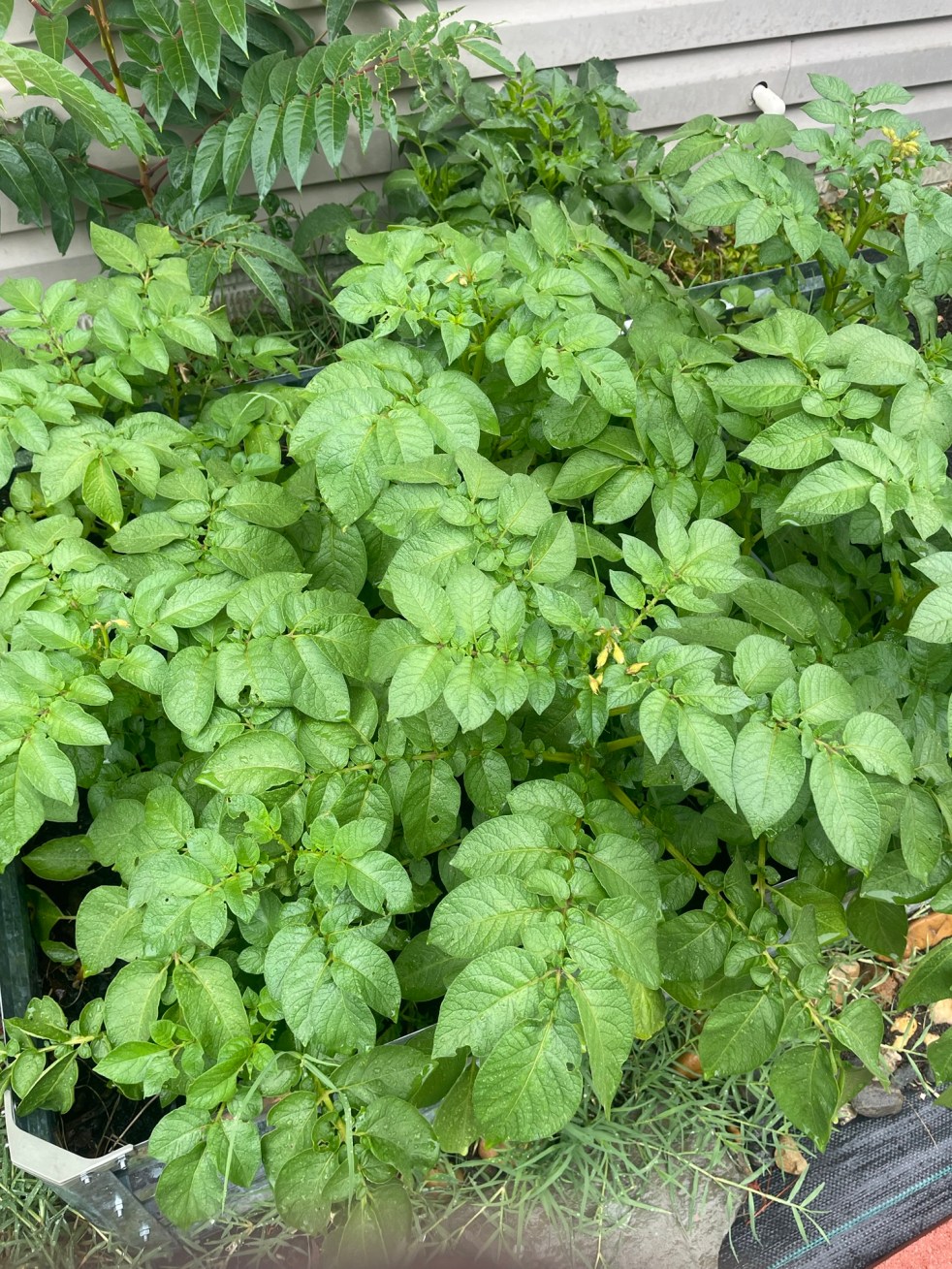
Thankfully, not everything is struggling. The potatoes are making steady progress and the corn is finally starting to look strong and established. My tomatoes are filling out nicely, the peppers are slowly taking off, and the peanuts are doing much better than I expected. Seeing those little wins helps balance out the disappointment of losing or struggling with other crops.

One thing Iโ€™m learning this season is that every garden tells a story. Some plants thrive in certain conditions while others refuse to cooperate. Instead of looking at setbacks as failures, Iโ€™m trying to see them as lessons for the next season. I may end up restarting the okra in a different area with more heat, and Iโ€™ll probably wait until cooler temperatures return before trying another round of spinach.

Even with the challenges, I still enjoy walking through the garden every morning. Thereโ€™s something peaceful about watching things grow slowly over time. Progress may not always look perfect, but progress is still progress.

Whatโ€™s growing well in your garden right now?

Recipes

Chocolate Chip Banana Bread and Quiet Morning Memories

Some cravings come out of nowhere. This morning, I woke up thinking about chocolate chip banana bread. Not just the taste of it, but the feeling attached to it. The warmth of it. The comfort. The kind of recipe that somehow carries memories inside of it.

That thought immediately made me think about my mom.

She was not a big baker, but banana bread was one of the things she made so well. Hers always had nuts in it, and it was honestly hard to stop eating once it came out of the oven. The smell alone could fill the entire house. Over the years, I tried to recreate that recipe, but one of my children has a tree nut allergy, so I had to make changes. Eventually, chocolate chips became the replacement, and somehow it turned into its own tradition. Different from my motherโ€™s version, but still connected to her in a way that matters.

Today happens to be junk food night in our house, so I decided to lean into the craving and make a loaf for breakfast. Nothing fancy. Just comfort food made from what I already had sitting in the kitchen.

I used:

  • 6 very overripe bananas
  • 2 cups of flour
  • 3/4 cup of sugar
  • 1/2 cup of extra virgin olive oil
  • 1/2 cup of semisweet chocolate chips
  • 1 1/2 teaspoons of baking soda
  • 1 teaspoon of vanilla extract
  • A dash of cinnamon
  • A dash of cloves

I also meant to add a teaspoon of salt, but completely forgot. Honestly, that happens sometimes when you cook from memory instead of from a recipe card. I figured I could always spread a little salted butter onto a warm slice and call it even.

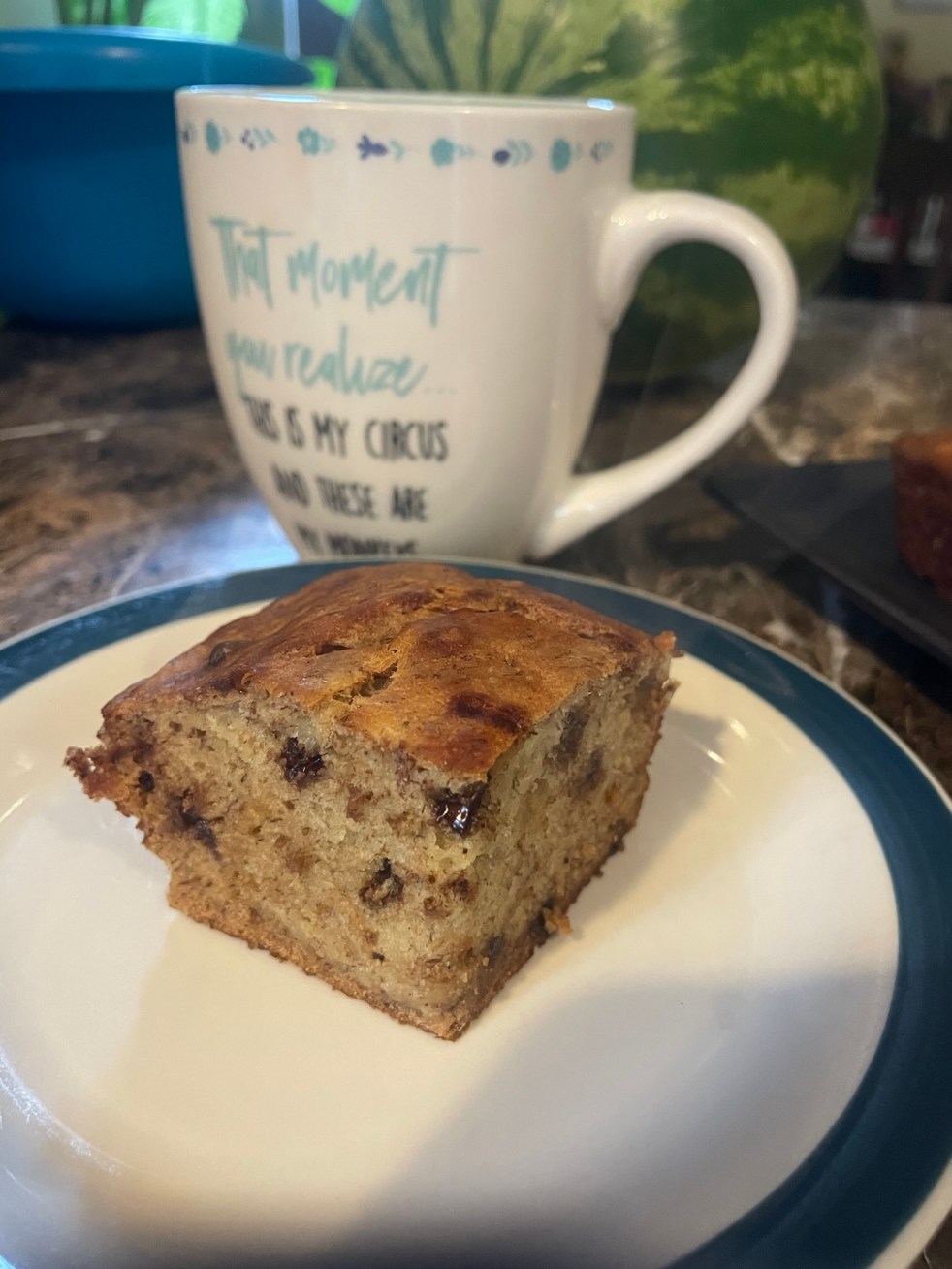
The bread came out soft, sweet, and full of chocolate in every bite. Exactly what I wanted.

Right now, Iโ€™m sitting here with a warm slice and a cup of coffee while the rest of the house is still asleep. The kitchen is quiet. The sun is barely up. And for a moment, life feels still in the best possible way.

Sometimes healing looks complicated. Sometimes it looks like rebuilding traditions in ways that fit your current life. And sometimes it looks like standing in your kitchen early in the morning, making banana bread that reminds you of where you came from while creating something new for the people you love now.

There is something beautiful about recipes evolving through generations. A little bit of memory. A little bit of adaptation. A little bit of love in every version.

Health & Fitness · Health & Fitness

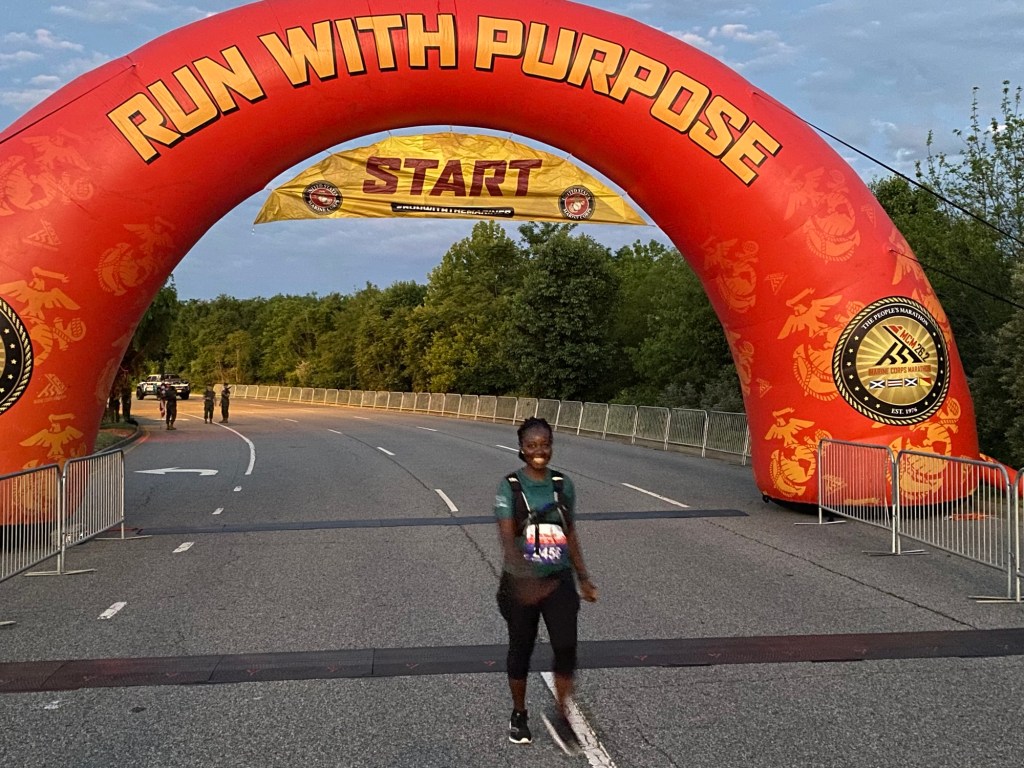
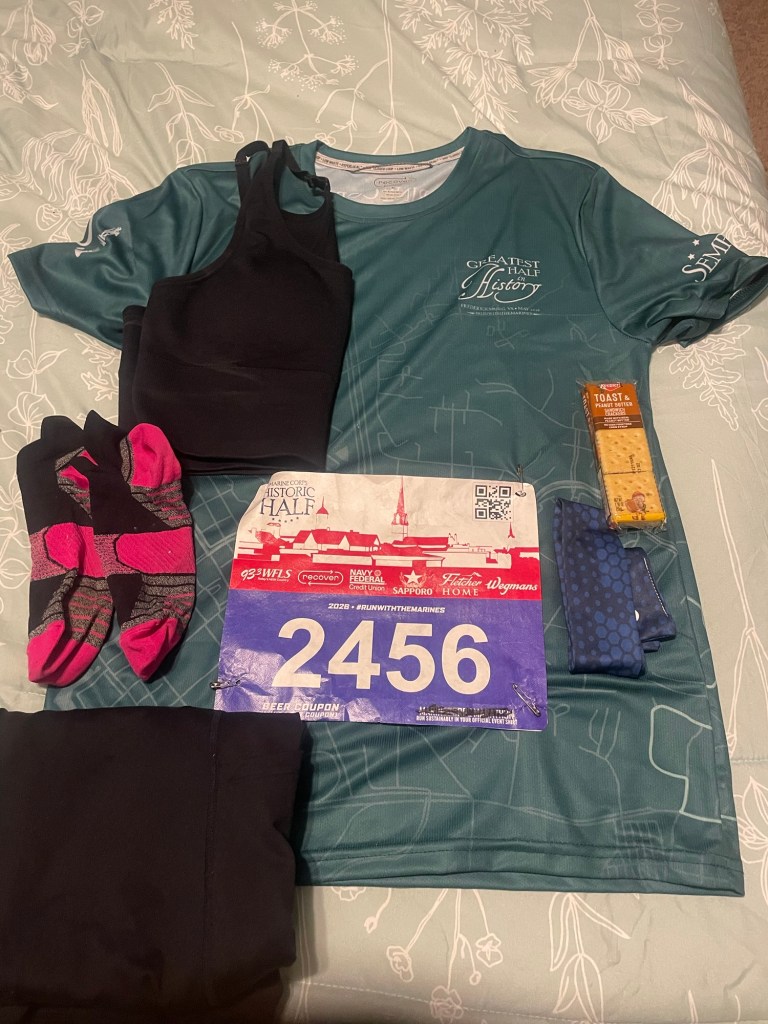
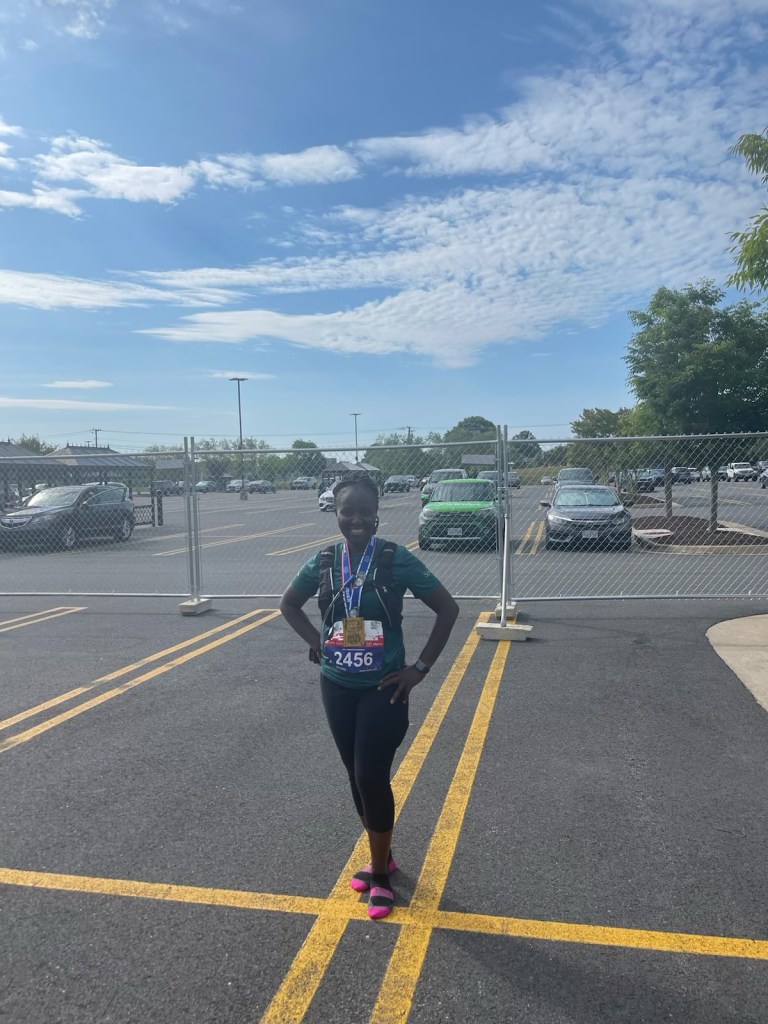
Marine Corps Historic Half: Progress Over Perfection

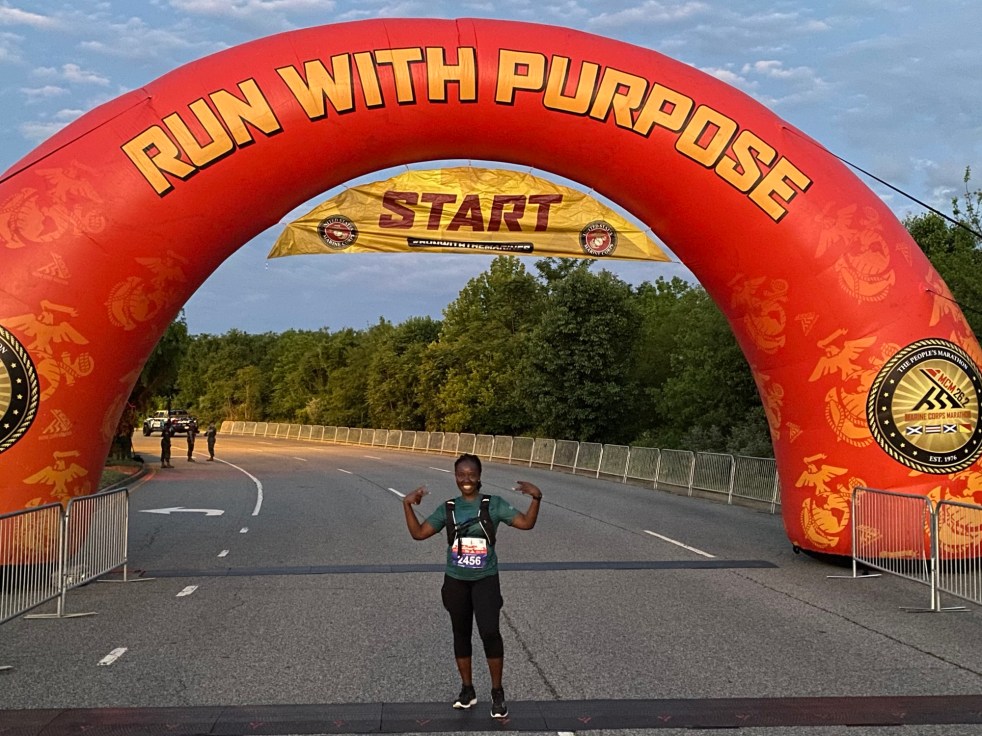
Thereโ€™s something humbling about lining up at the starting line of the Marine Corps Historic Half knowing that the weather may test you just as much as the distance itself.

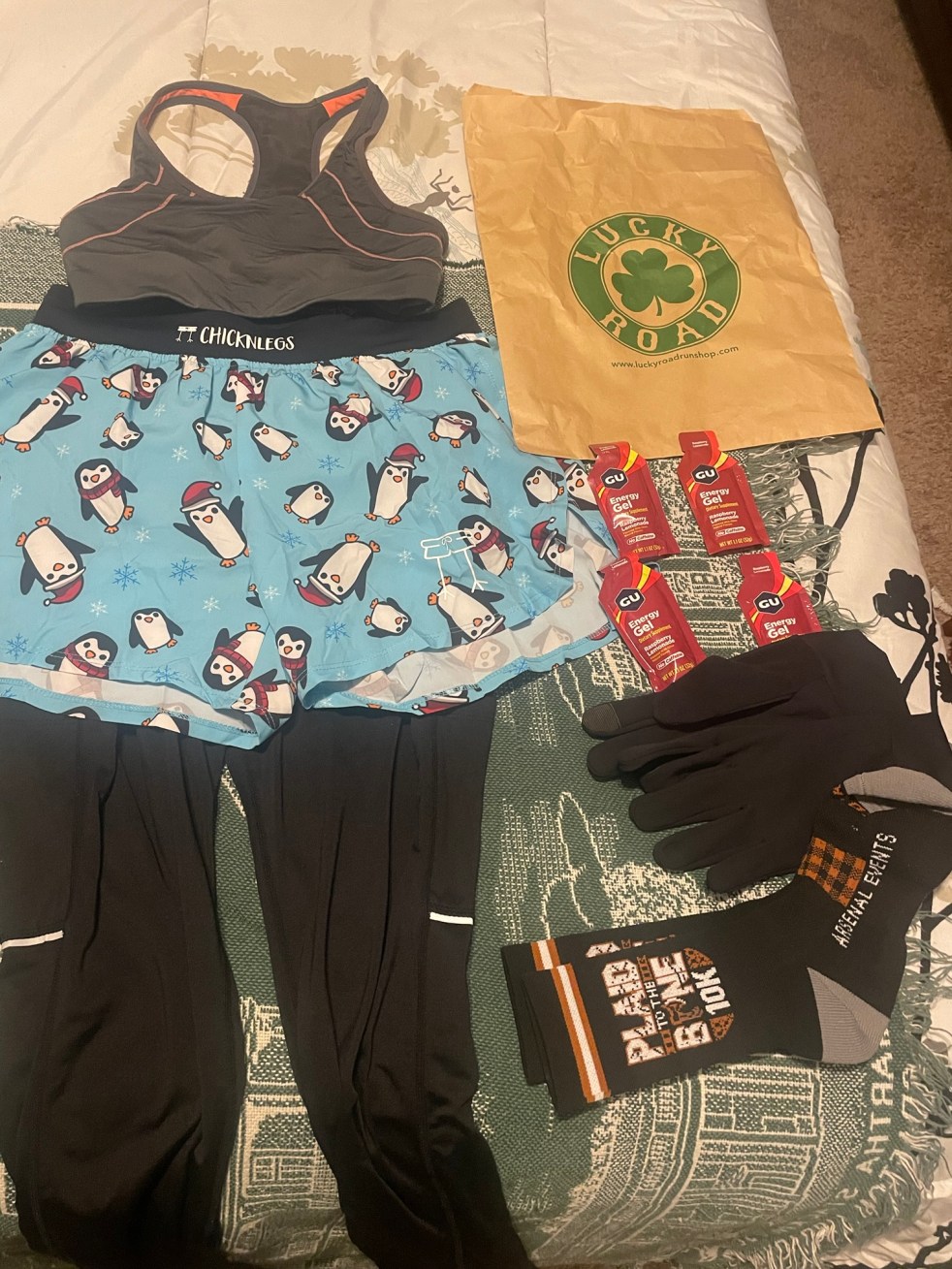
This yearโ€™s race was warmer than expected, and I knew early on that trying to force the pace I originally planned for would have probably ended badly. Instead of fighting my body, I listened to it. I adjusted my pace, focused on consistency, and reminded myself that endurance is just as much mental as it is physical.

And honestly? That decision paid off.

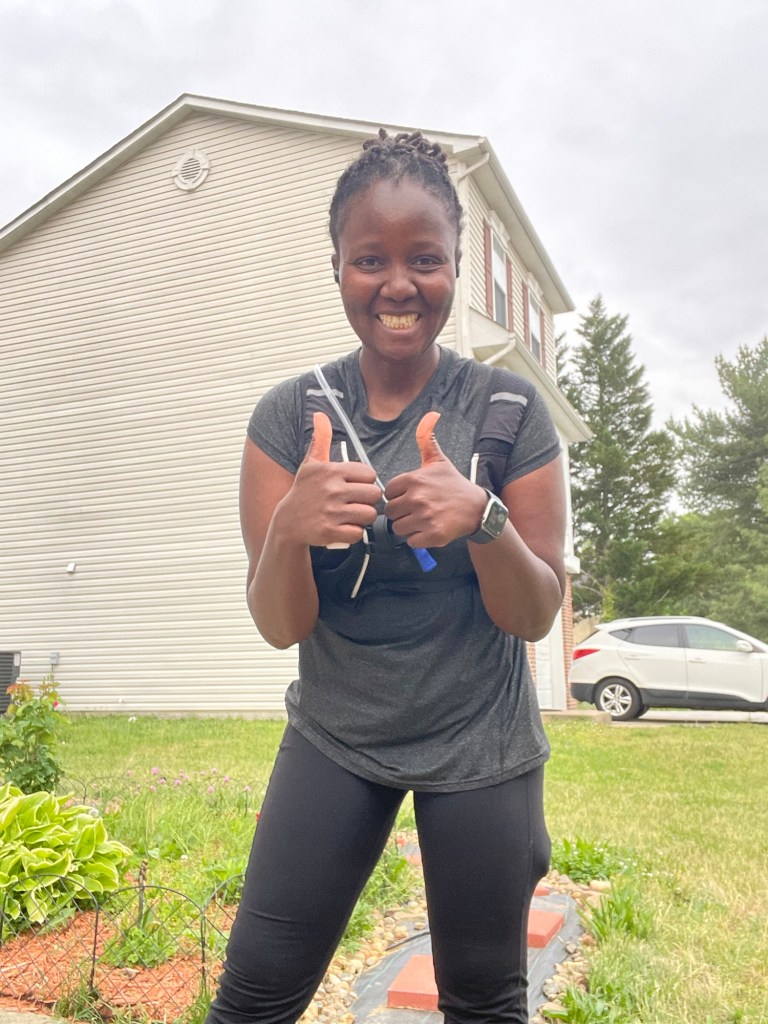
I finished the race more than 10 minutes faster than I did last year.

That improvement means a lot to me because it wasnโ€™t about suddenly becoming an elite runner overnight. It came from months of small decisions:

  • showing up even when I was tired,
  • training after long shifts,
  • learning how to recover properly,
  • and being willing to adapt instead of quitting.

Two things that genuinely helped me this training season were Strava and Runna. Strava helped me stay accountable and track my progress over time, while Runna gave me more structure and helped me train with intention instead of just running aimlessly.

One of the biggest lessons Iโ€™m learning as a runner is that every race day requires flexibility. You can train for months, but weather, stress, sleep, nutrition, and life itself will still influence performance. The goal is not perfection. The goal is learning how to adapt without giving up.

Some miles felt strong.
Some miles felt long.
Some hills still humbled me.

But I kept going.

Crossing that finish line reminded me how important it is to celebrate progress, even when the journey doesnโ€™t look flawless. Last yearโ€™s version of me would be proud of how far Iโ€™ve come physically and mentally.

Running has become more than exercise for me. It has become proof that growth happens slowly, quietly, and often long before anyone else can see it.

And this race reminded me that Iโ€™m stronger than I think.


What Helped Me Most This Training Cycle

  • Structured training plans
  • Slowing down on recovery days
  • Adjusting for weather conditions
  • Staying consistent instead of chasing perfection
  • Listening to my body instead of my ego
  • Fueling and hydrating better before long runs
  • Remembering that progress is still progress, even if the run doesnโ€™t feel โ€œperfectโ€

Final Thoughts

If youโ€™re training for a race right now, especially as a beginner or someone returning to running, give yourself grace.

Every mile counts.
Every slow run counts.
Every decision to keep showing up counts.

You do not have to run perfectly to grow.

And sometimes the biggest victory is simply becoming stronger than you were the year before.

Recipes

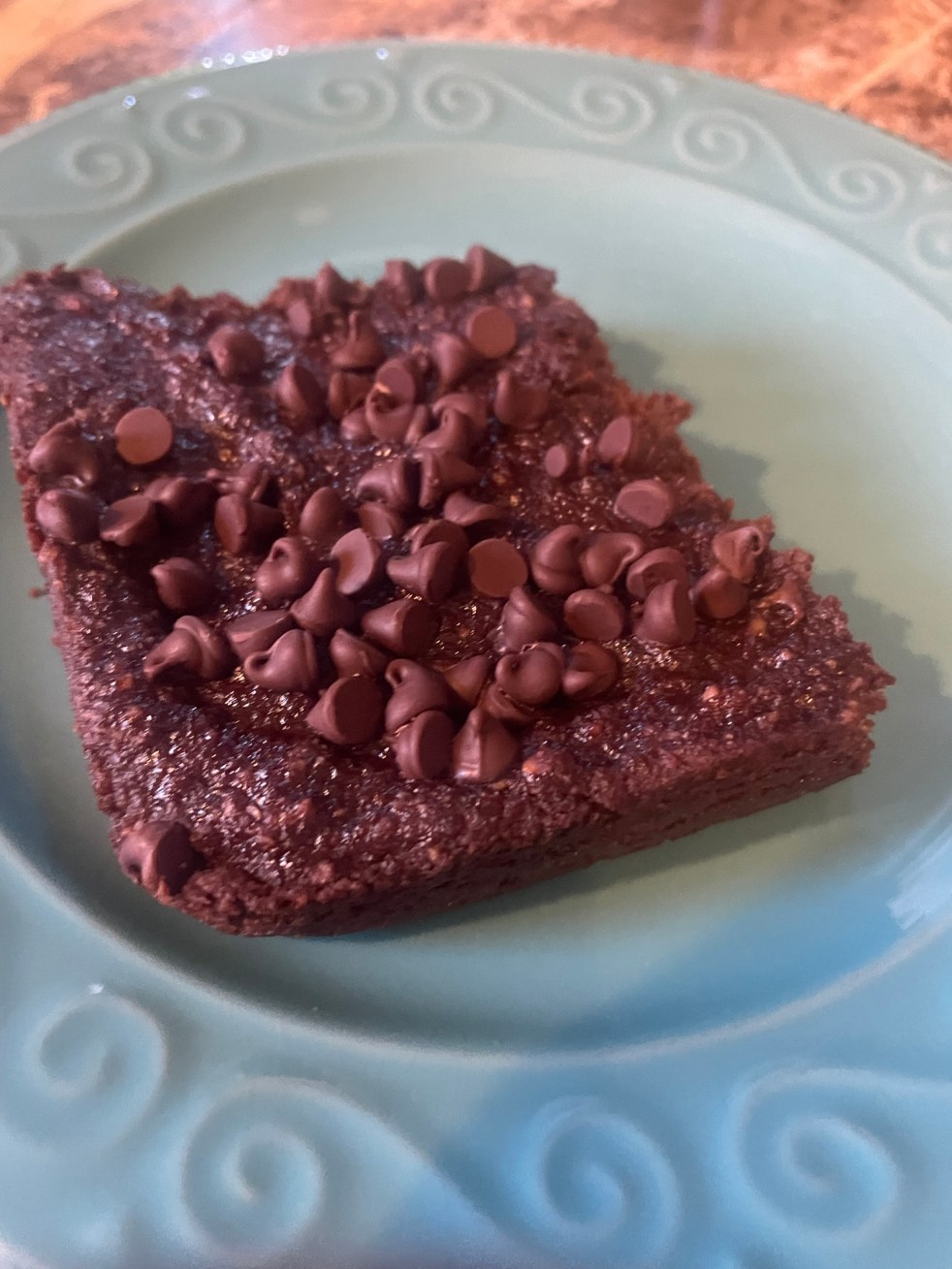
Almost Hits: Beet Pulp Vegan Brownies & Learning to Cook Differently

Thereโ€™s something oddly satisfying about making a recipe completely from scratch โ€” especially when it starts with ingredients that most people would probably throw away.

Recently, I decided to experiment with a healthier vegan brownie recipe using homemade almond flour, homemade almond milk, and the leftover beet grounds from a batch of homemade fruit punch. Iโ€™ve been trying to find more ways to naturally incorporate iron-rich foods into our familyโ€™s meals without making every meal feel overly โ€œhealthy,โ€ and honestlyโ€ฆ this recipe landed somewhere between an almost hit and a full success.

The brownies came out soft, delicate, and more cake-like than fudgy. Considering I was working with homemade ingredients that tend to behave differently than store-bought versions, I was actually pretty happy with the outcome. I used homemade almond flour, applesauce, flaxseed meal as an egg substitute, cocoa powder, vanilla, sugar, and chocolate chips on top before baking everything at 350 degrees for about 45 minutes.

And surprisingly? It worked.

Now, did everyone in the family immediately fall in love with them? Not exactly.

Some people enjoyed them, while others were a little skeptical โ€” which is fair. When people are used to rich, ultra-sugary brownies, healthier versions can feel a little different at first. But thatโ€™s part of this journey for me. Iโ€™m learning that healthier cooking doesnโ€™t have to be perfect to still be worthwhile.

Sometimes the goal isnโ€™t to recreate traditional comfort food exactly as we remember it. Sometimes the goal is simply finding better ways to nourish ourselves while still enjoying the process.

What I loved most about this recipe was the intention behind it:

  • Using beet grounds instead of creating food waste
  • Making homemade almond flour instead of relying on heavily processed ingredients
  • Using flaxseed instead of eggs
  • Finding simple ways to increase iron-rich foods in our daily meals

It reminded me that not every recipe has to be a viral masterpiece to be meaningful. Some recipes are stepping stones. Some are experiments. Some are โ€œalmost there.โ€ And honestly, I think thereโ€™s value in sharing those too.

Because real cooking โ€” especially when youโ€™re trying to feed your family healthier meals on a budget โ€” is a lot of trial, error, adjusting, and trying again.

Iโ€™ll probably tweak this recipe next time by adding a little more healthy fat for richness and maybe reducing the bake time slightly for a softer center. But overall? Iโ€™d still call this one a win.

Not every healthy recipe has to fool people into thinking itโ€™s unhealthy to be worth making.

And maybe thatโ€™s what this new series is really about:
celebrating the almost hits too.

Book Club

The Complexity of Motherโ€™s Day

Motherโ€™s Day is a layered day for millions of women.

In one breath, we are overjoyed to celebrate the bond we share with our children. We hold them close, laugh with them, and feel gratitude for the opportunity to love them in ways we may not have been loved ourselves. But in the next breath, many of us are grieving. Not necessarily because our mothers are gone, but because of the painful realization that we never truly experienced the kind of mothering we needed.

There is a particular kind of grief that comes from watching someone give to others what they could never seem to give to you.

Sometimes I look back at the way my mother treated my siblings and wonder if she truly saw me as her child at all. I witnessed her capacity for love, tenderness, and compassion. I saw her celebrate others, support others, and show up emotionally for others. That is what made it hurt even more. It wasnโ€™t that she lacked the ability to love. It was realizing that, somehow, that love rarely reached me.

For a long time, I questioned myself because of it. Children naturally assume that love is earned. So when it is withheld, inconsistent, or conditional, many of us grow up believing we must have done something wrong. We spend years trying to become more lovable, more agreeable, more accomplished, more useful โ€” hoping that eventually we will receive the softness we have been craving all along.

But some wounds do not come from loud abuse. Some come quietly through emotional absence, comparison, neglect, favoritism, or simply never feeling chosen.

Motherโ€™s Day can reopen those wounds.

It can be painful to scroll through celebration after celebration while carrying the silent grief of never feeling protected, nurtured, or emotionally safe. Society often speaks about motherhood as though it is automatically loving, but many people are learning that giving birth and providing emotional care are not always the same thing.

And yet, despite all of this, many wounded daughters grow up to become incredibly loving mothers themselves.

There is something both heartbreaking and beautiful about learning to give your children the love you once begged for. Many mothers are actively breaking cycles while simultaneously grieving the childhoods they never had. That emotional contradiction is exhausting. It is possible to deeply love your children while mourning the fact that no one loved you in that same way.

Both things can exist at once.

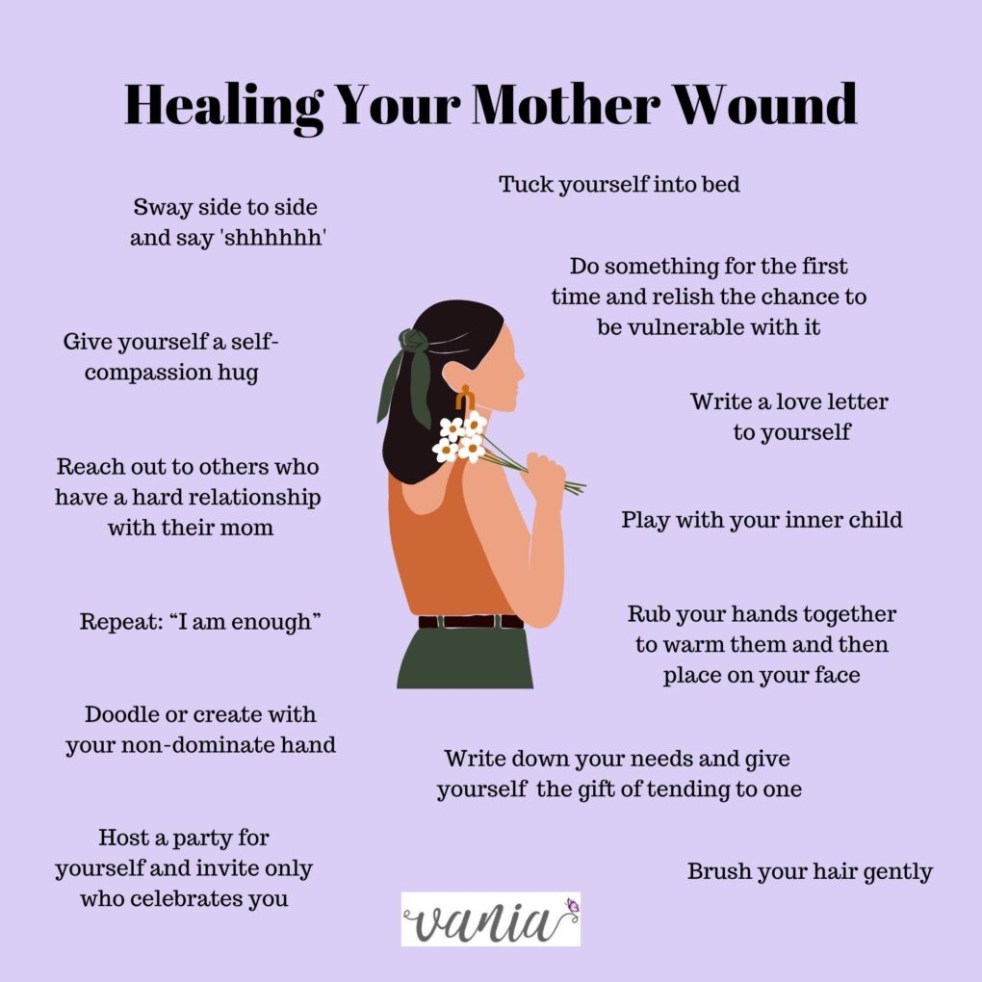
For those carrying complicated feelings this Motherโ€™s Day, you are not alone. Your grief does not make you ungrateful, bitter, or broken. It makes you human. Healing often begins when we finally allow ourselves to acknowledge what we lost instead of pretending it never mattered.

And maybe that is where the real healing begins:
Not in forcing ourselves to celebrate what hurt us,
but in becoming the kind of love we deserved all along.

Health & Fitness · Health & Fitness

Running Toward 65: Taking Control of My Health

This Isnโ€™t Just About Running

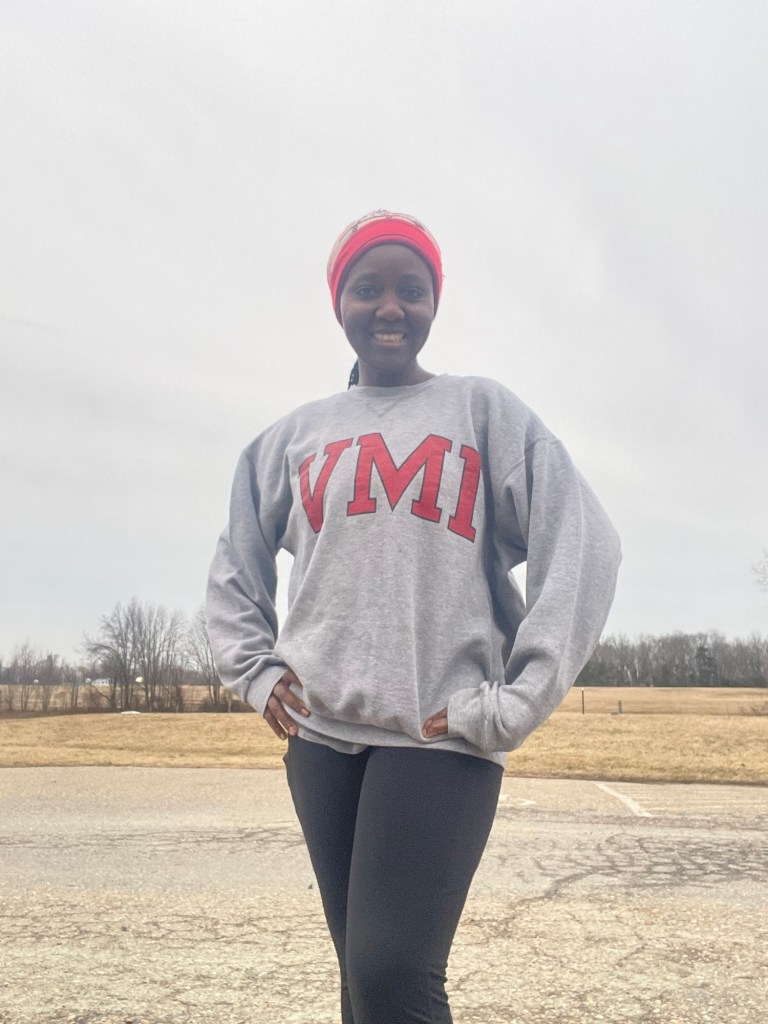
I got into running before the age of 10, and for a long time, it was just a part of who I was. Over the years, I stepped away from it more than onceโ€”sometimes because of injuries, and other times because life, especially motherhood, demanded more of me. Running slowly became something I used to doโ€ฆ instead of something I returned to. But as my children got older, I started to feel this quiet pull. Like something in me was asking me to come back to it. To lace up my shoes again. To reconnect with what once felt natural.

I was never the fastest runner, and honestly, that was never the point. I ran because it was something I could control.
Because it gave me space. Because, for a little while, the focus could just be on me and what I needed. Then everything shifted.

Two years ago, my mother passed away from a preventable medical condition at the age of 65. That loss changed how I look at my healthโ€”and my future. What made it even harder to ignore was the pattern. My maternal grandmother also passed away at 65. She was the youngest in her generation. Just like my mother. And just like me. That realization stayed with me. And I knew I didnโ€™t want that to be my story.

I want to outlive them both. I want something different. And the only way that happens is by taking control of my health. So, at the end of 2025, I made the decision to start running againโ€”consistently this time. Around Christmas, the idea came to me:

65 half marathons.

Not all at once, and not rushed, but over time and with intention, I plan to run at least two half marathons a yearโ€”knowing realistically I may need to average closer to three to reach my goal of 65 before my 65th birthday. This journey isnโ€™t about running for the sake of running; itโ€™s about making a decision and understanding that it will be challenging at times. Iโ€™m choosing to share this because I want to encourage anyone who finds themselves thinking about their mortality or facing health challenges. Life will always bring obstacles, but when we learn to look at them through a different lens, those same challenges can lead us to something meaningfulโ€”maybe even something joyful


Just Showing Up

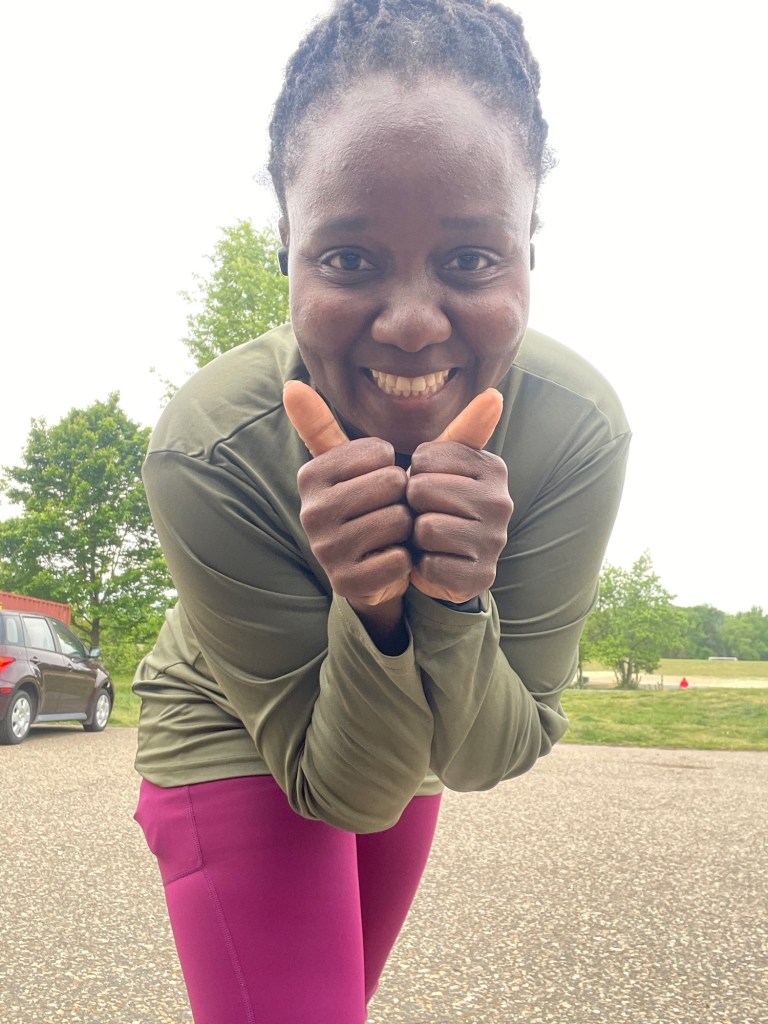
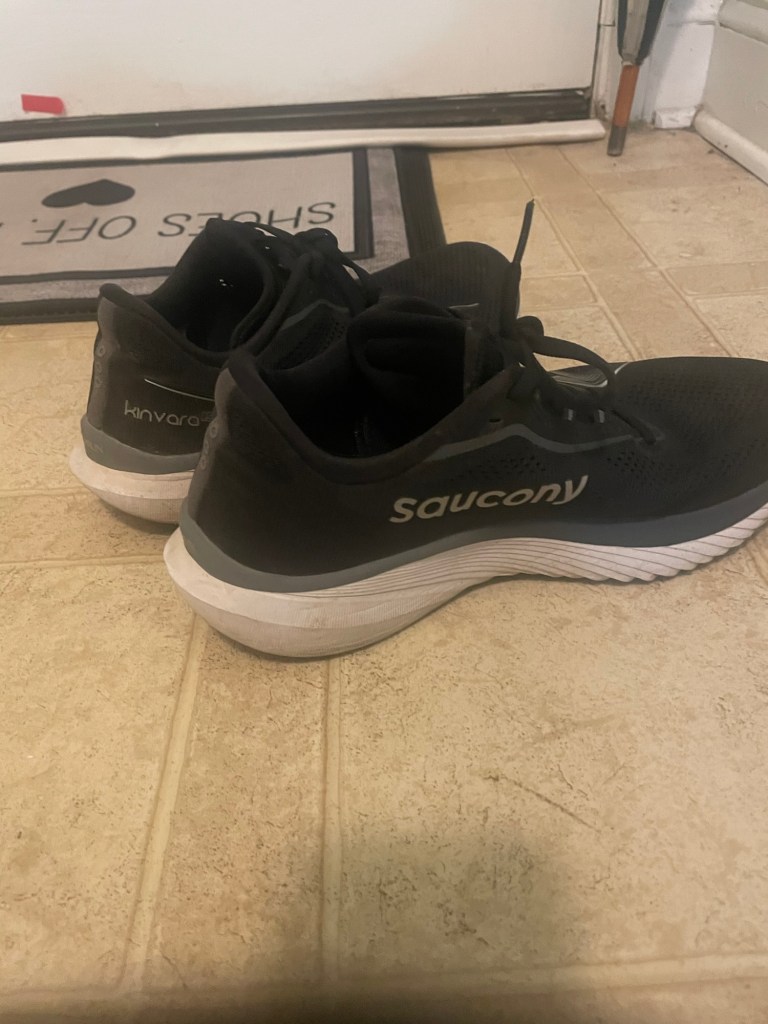
These days, my routine is pretty simple. I follow my training plan on Runna, I lace up my shoes, and I go. Some days feel strong.
Some days feel slow. Some days, I donโ€™t feel like going at all. And on those days, Iโ€™ve learned something important. I donโ€™t have to be perfect. I just have to show up. And when my body needs rest? I take it. Because Iโ€™m not trying to burn out or get injured trying to prove something. Iโ€™m trying to build something that lasts.


Changing the Direction

At some point, this stopped being about โ€œjust getting in shape.โ€ It became something deeper. Health doesnโ€™t just happen. Itโ€™s built on the small decisions. In the habits we keep. In the moments we choose to show upโ€”even when we donโ€™t feel like it. Running has become one of those habits. Not because itโ€™s always easy. But because it creates spaceโ€”for clarity, for strength, and for something that feels like peace.


Finding Something I Didnโ€™t Expect

I didnโ€™t expect to enjoy this. Thatโ€™s probably the most surprising part. Running has given me a kind of stillness I didnโ€™t know I needed. Thereโ€™s something about being out there, moving forwardโ€”even when things feel heavyโ€”that shifts something mentally. It clears space. And in that space, Iโ€™ve found something that feels a lot like joy. Another part of this journey that I didnโ€™t expect was the sense of community. I joined two local running groups, and through them, Iโ€™ve met some really great peopleโ€”people who understand the effort it takes just to show up. On the days when my motivation is low, that sense of community makes a difference. It helps keep me accountable. It reminds me that Iโ€™m not doing this alone. And thatโ€™s something Iโ€™m truly grateful for.


Thinking About the Future

Iโ€™m in my early 40s now. And I think about the future a little differently. Iโ€™m not just thinking about getting through the day or the week. Iโ€™m thinking about being here long enoughโ€”and healthy enoughโ€”to really live. To show up for my children.
To be present in their lives. And maybe one day, to meet my grandchildren. That matters to me.


Learning to Listen

One thing running is teaching me is how to listen to my body. Don’t ignore pain. I learned that the hard way and was sidelined for several years. Running is going to hurt, and it is good to know which pain to take seriously and which one to listen to. Don’t push past everything; sometimes rest is exactly what you need. Because rest is part of the work, too, learning this concept has helped my running so much more than before. And choosing not to get injured? Thatโ€™s part of the discipline.


The Story Iโ€™m Writing Now

This isnโ€™t about being the fastest runner. Or having the perfect training schedule. Or doing everything right. This is about showing up for myself in a way I didnโ€™t before, about choosing health. About choosing longevity. About choosing something different. One run at a time. I have tried out different running apps over the years to help create a safe and realistic training schedule. I downloaded the Runna app in May of 2025, and I used it to train for the Blue and Gray Half Marathon in December 2025. I felt strong and ready for that. Sticking with the running schedule my team of trainers created really helped me feel strong and confident to complete that race.


Letโ€™s Talk

If youโ€™ve been thinking about taking control of your healthโ€ฆStart where you are. Start small- by either getting a gym membership, joining local fitness clubs in your area, and setting small goals that can be expanded as you grow on your health journey. It is not about perfection; it is about taking control of your health and learning about what works for you. Running works for me because it allows me to be out in nature. You donโ€™t need perfect timing or perfect conditions; there will never be a perfect time or season to take charge of your life and health. If you decide to start today, then go for it.