
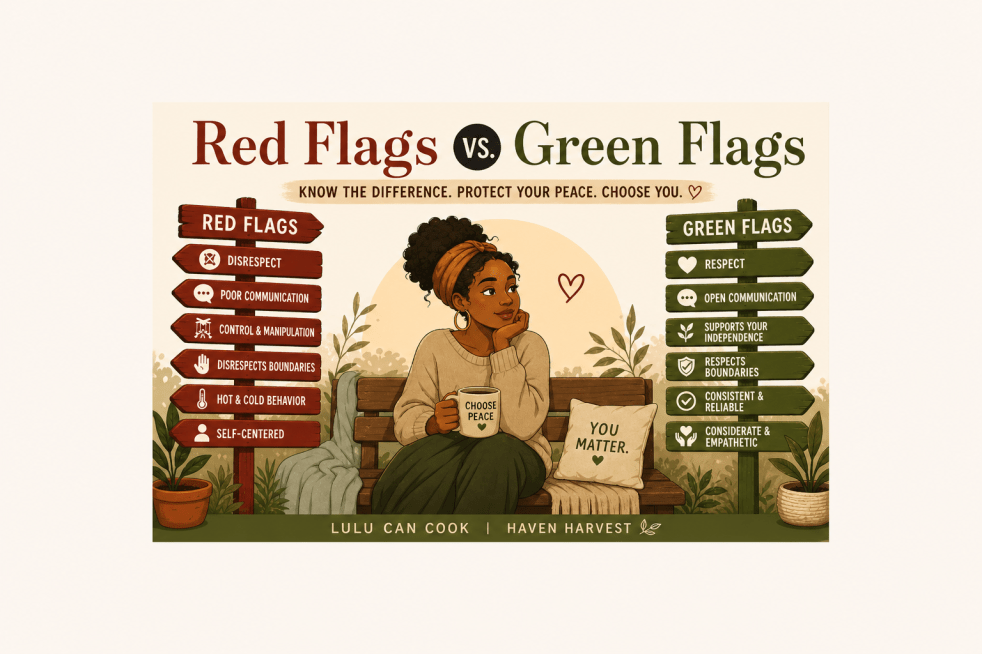
This post is not like my typical posts and I appreciate you taking the time to read and maybe share it. In the wake of so many recent domestic violence cases coming up in the news I felt inclined to share some of the early warning signs that both men and women miss in relationships. We live in a fast paced society and sometimes that paired with traumatic/toxic childhoods, it can be hard to see what is healthy and is not healthy in romantic relationships.
Sometimes, the difference between healthy and unhealthy love isn’t obvious. Not because the signs aren’t there—but because of what many people were taught to accept early in life. The way someone experiences love growing up can shape what feels normal later on. If love felt inconsistent, conditional, or emotionally unsafe, those patterns can quietly become familiar. And familiarity can feel a lot like connection.
When Red Flags Feel Normal
For many people, certain behaviors don’t immediately stand out as unhealthy—especially if they’ve seen or experienced them before. Let’s take a closer look.
1. Lack of Respect:

Being dismissed, talked down to, or made to feel “too sensitive” can become easy to overlook when respect wasn’t consistently modeled.
Green flag: Feeling heard, valued, and taken seriously.
2. Poor Communication:

Silence, avoidance, or conversations that turn into blame can feel familiar—but they often leave people feeling unheard.
Green flag: Open, honest conversations where both people feel safe expressing themselves.
3. Control Disguised as Care:

Guilt, pressure, or subtle manipulation can sometimes be mistaken for love or concern.
Green flag: Support that allows space, independence, and personal growth.
4. Disrespecting Boundaries:

Feeling guilty for saying no—or being pushed past personal limits—is a sign that boundaries aren’t being honored.
Green flag: Boundaries are respected without pressure, guilt, or punishment.
5. Hot and Cold Behavior:

Inconsistency can feel intense, but it often creates confusion and anxiety over time.
Green flag: Consistency, reliability, and emotional steadiness.
6. Self-Centered Dynamics:

When everything revolves around one person’s needs, the relationship can start to feel one-sided.
Green flag: Mutual care, empathy, and shared emotional space.
What Makes This So Hard
For people who learned to adapt, people-please, or keep the peace, these patterns don’t always stand out right away. They can feel familiar. Predictable. Even comfortable in a way that’s hard to explain. But familiar doesn’t always mean healthy.
Choosing Something Different
Learning to recognize these patterns is not about blaming the past—it’s about creating awareness in the present. Healthy relationships may feel different at first. Quieter. Steadier. Less overwhelming. But that difference often means something important is finally present. The bottom line is that a healthy relationship should feel like a place to land. Not a place to constantly question, prove and or recover from.
A Gentle Check-In
If this resonated, take a moment to reflect:
- Which patterns have felt familiar in past relationships?
- Which green flags feel unfamiliar—but important?
- What would it look like to choose peace, even if it feels new?
You don’t have to figure everything out today.
But awareness is a powerful place to start.
Let’s Talk
If you feel comfortable, share your thoughts in the comments:
- Which red flag do you think people overlook the most?
- Or which green flag changed your perspective on love?
Your voice might help someone else see things more clearly.
Thank you for your continued support and visits.
-Lulu
 Haven Harvest Living