Recipes

🍪 Festive Family Cookies: A Sweet Twist on Prue Leith’s Iced Tea Biscuits

Introduction

There’s something magical about baking during the holidays. Sweet aromas fill the kitchen. Laughter comes when flour dusts the counter. There is joy in creating something together as a family.

The kids and I decorated these while playing a musical trivia game.

This year, I wanted to try something a little different. I decided on a festive cookie that brings everyone to the table. It’s perfect for both baking and decorating. I was inspired by The Great British Baking Show and Prue Leith’s elegant Iced Tea Biscuits. I created my own version. It is a spiced, buttery cookie that’s crisp at the edges and soft in the center. It’s perfect for personalizing with colorful icing.

Ingredients

(Makes about 20 cookies)

  • For the cookies:

• 2 ¼ cups all-purpose flour

• ½ teaspoon baking powder

• ¼ teaspoon salt

• ½ teaspoon ground cardamom

• ½ teaspoon ground ginger

• ½ teaspoon ground cloves

• ¾ cup unsalted butter, softened

• ½ cup granulated sugar

• ½ cup brown sugar

• 1 large egg

• 1 teaspoon vanilla extract

• 1 teaspoon lemon or orange zest (for a bright, tea-inspired flavor)

  • For the icing:

• 1 ½ cups powdered sugar

• 1–2 tablespoons milk (adjust for consistency)

• ½ teaspoon vanilla or almond extract

• Food coloring or edible decorations (optional)

Instructions

  1. Preheat & Prepare: Preheat your oven to 350°F (175°C). Line two baking sheets with parchment paper.
  2. Make the Dough: In a bowl, whisk together the flour, baking powder, salt, cardamom, ginger, and cloves. In a separate bowl, beat the butter and sugars together until light and creamy. Add the egg, vanilla, and zest, then gradually mix in the dry ingredients until a soft dough forms.
  3. Roll & Cut: Lightly flour your surface and roll the dough to about ¼ inch thick. Cut into festive shapes — stars, trees, hearts, or whatever brings you joy.
  4. Bake: Place cookies on the prepared trays and bake for 8–10 minutes, or until the edges are just golden. Let them cool completely on a wire rack before decorating.
  5. Decorate Together: While the cookies cool, mix the icing ingredients until smooth and glossy. Divide and tint with colors of your choice. Then gather the family, pour some tea or cocoa, and enjoy decorating together.

(Insert your finished cookie photos here — include a mix of decorated and plain versions to show their natural beauty.)

Tips from My Kitchen

• These cookies taste even better the next day as the spices deepen.

• Let kids use piping bags or small squeeze bottles for creative designs.

• Store in an airtight container for up to a week — if they last that long!

Reflection

Baking these cookies reminded me that traditions don’t have to be passed down — sometimes, we create them from scratch. Whether it’s laughter over uneven icing or sneaking a cookie before the glaze sets, these moments are shared. They make the holidays special.

This recipe has officially earned a place in my family’s kitchen. It’s not just for its flavor. It is also cherished for the memories it helps make.

Health & Fitness · Health & Fitness

🧠 Train Your Mind Like a Muscle

How Learning New Skills Protects Your Brain

Disclosure: Some of the links in this post are affiliate links. If you choose to purchase through them, I may earn a small commission at no extra cost to you. Thank you for supporting the blog.

As we age, we often focus on keeping our bodies strong — eating well, exercising, and managing stress. But what about our minds? Just like our muscles, our brains need regular training to stay sharp.

Studies show that learning new skills can help protect the brain from neurological disorders like Alzheimer’s and dementia. Each time we take on a new challenge, we build cognitive reserve. This reserve is the brain’s ability to create new neural pathways. It also helps the brain stay resilient against decline. The good news? It’s never too late to start.

Why the Brain Thrives on Challenge

Our brains are wired for growth. Every time we step out of our comfort zones, we activate parts of the brain. These parts control memory, focus, and problem-solving. Novelty keeps the mind active. Whether it’s picking up a new language, it encourages mental engagement. Learning to cook a new recipe encourages mental engagement. Tackling a home project encourages mental engagement. The harder you work to master something unfamiliar, the stronger those neural connections become.

My Experience: Learning by Doing

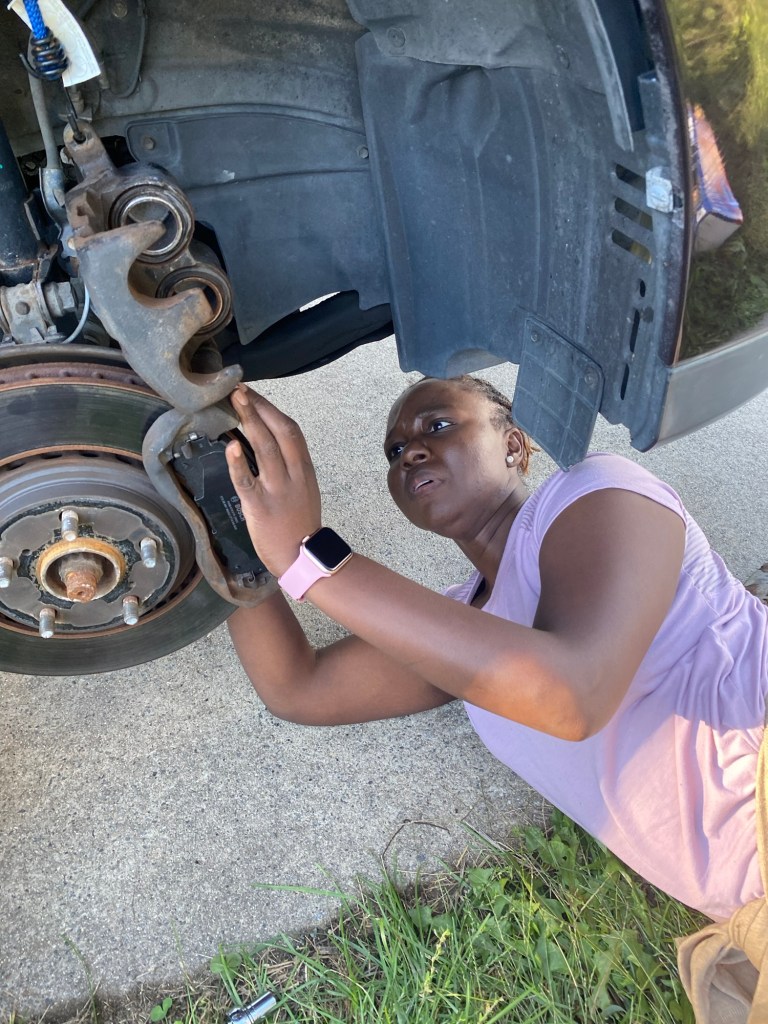
This year, I challenged myself with something completely different — car repair. My front brake pads needed replacing, as did the left rear tail light assembly on my Toyota Highlander. Instead of heading to a mechanic, I decided to learn how to do it myself.

I spent several evenings reading guides and watching YouTube tutorials before I felt confident enough to start. At first, it was intimidating. I had never done anything mechanical before. But once I began, I felt empowered. Every turn of a wrench taught me patience and focus. By the end, I had successfully replaced my brakes and tail light assembly. It wasn’t just about fixing a car; it was about strengthening trust in myself. That sense of accomplishment reminded me that growth happens when we push through discomfort.

The Science Behind “Cognitive Fitness”

Just as lifting weights builds physical strength, learning new skills builds mental strength. Psychologists call this neuroplasticity — the brain’s ability to rewire itself by forming new connections. Regularly engaging in mentally demanding activities can help improve memory and concentration. It can also boost problem-solving skills. Furthermore, these activities delay cognitive decline as we age. When we stay curious and open to learning, we give our brains a powerful defense mechanism — adaptability.

Shifting Your Mindset Toward Lifelong Learning

Many people believe that learning stops after school, but the truth is, the brain never loses its ability to grow. The key is embracing the right mindset:
– Replace “I’m too old for this” with “I’m just getting started.”
– View mistakes as evidence of progress, not failure.
– Celebrate small wins — they build motivation and confidence.
Every time you take on a new challenge, you’re proving that growth is still possible. That mindset is one of the healthiest you can cultivate.

Everyday Ways to Strengthen Your Mind

You don’t need a classroom to keep learning. You can start small, right where you are:
– Try a new recipe or cooking technique.
– Learn a few words in another language.
– Practice meditation or journaling.
– Take on a DIY project.
– Read new genres or listen to educational podcasts.
Consistency matters more than difficulty — even a few minutes a day of focused learning keeps your brain active.

What I Used to Replace My Front Brakes and Left Rear Tail Light (Toyota Highlander)

If you’d like to try something similar, here are the exact tools and parts I used for my project:

– Power Stop Front Brake Pads Kit – Amazon: https://www.amazon.com/dp/B00XM0F0F0?ref=ppx_yo2ov_dt_b_fed_asin_title
– Tail Light Assembly – Amazon: https://www.amazon.com/dp/B09TKVLMLN?ref=ppx_yo2ov_dt_b_fed_asin_title&th=1
– 27-Piece Magnetic T-Handle Ratchet Wrench & Screwdriver Set – Amazon Basics: https://www.amazon.com/dp/B07V3TF3NG?ref=ppx_yo2ov_dt_b_fed_asin_title&th=1
– Dasbecan Compatible Tail Light Assembly for Toyota Highlander – Amazon: https://www.amazon.com/Dasbecan-Compatible-Highlander-815500E070-815600E070/dp/B0BL2C126T/ref=sr_1_1_sspa?crid=26UFLB3549PYD
– YouTube Tutorial: How to Replace Front Brakes on a Toyota Highlander
– YouTube Tutorial: Left Rear Tail Light Assembly Replacement for Toyota Highlander
Always double-check compatibility for your car’s make and model before purchasing parts.

Closing Thought

Learning new skills keeps more than your hands busy — it keeps your mind alive. Every time you challenge yourself, you’re not just building knowledge; you’re strengthening the very structure of your brain. So pick up that tool, try that recipe, or start that class you’ve been putting off. Your brain will thank you — today and years from now.

Taking out the old brake pads on the right side of the vehicle.
Recipes

Sierra Leonean Stewed Black-Eyed Peas | Plant-Based Comfort by Lulu Lee

🌿 Remembering My Grandmother Through Food

Every time I make this stew, it feels like coming home. The smell of onions, bell peppers, and garlic fills my kitchen the same way it filled my grandmother’s when I was growing up in Sierra Leone.

Her black-eyed pea stew was always made with love — sometimes made with chicken, beef, or fish — depending on what was available that day. What made it special wasn’t just the ingredients, but the patience and care she poured into every simmering pot.

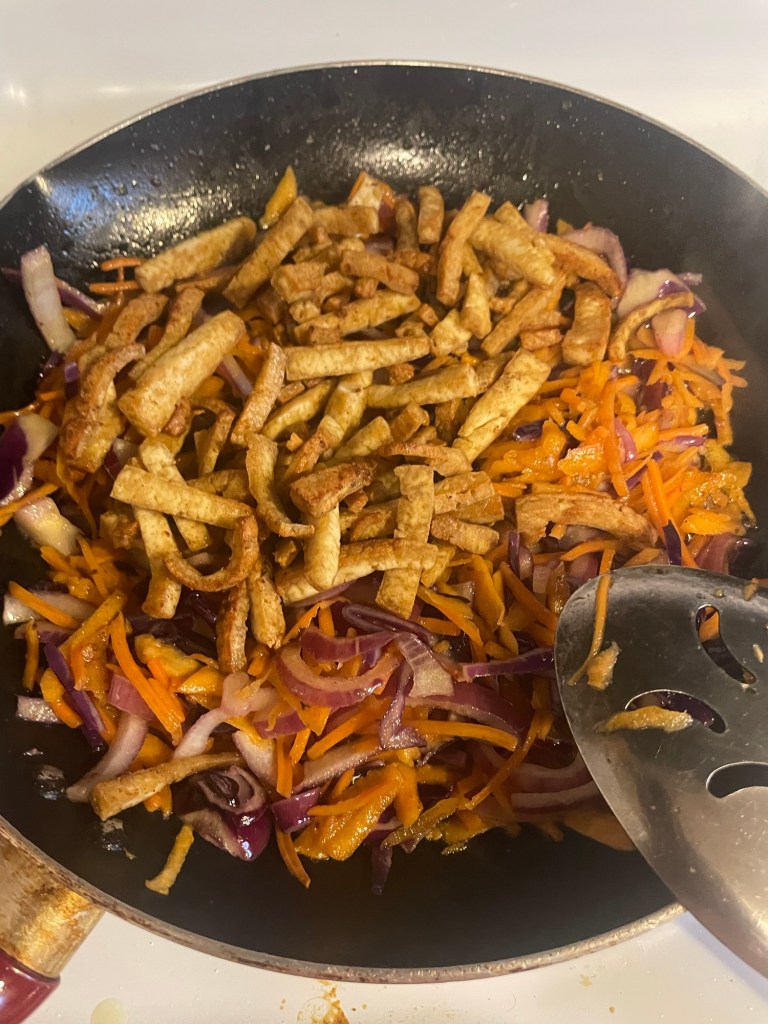
Now, years later, I’ve given up meat but not the memory. This plant-based version keeps her spirit alive in my kitchen, using soy strips instead of meat. The flavors remain rich, earthy, and comforting — a bridge between who I was and who I’m becoming.


🥣 Ingredients

  • 2 cups precooked black-eyed peas
  • 1 cup rehydrated soy strips (I use Mkostlich Soy Strips)
  • 2 large onions, peeled and chopped
  • 2 bell peppers, seeded and chopped
  • 1 large tomato, chopped
  • 2 tablespoons tomato paste
  • ½ cup olive oil (or palm oil, for a traditional flavor)
  • Seasoning salt, to taste
  • Cayenne pepper, to taste
  • Ginger and garlic, to taste

🍲 Directions

  1. Prepare the soy strips.
    Rehydrate 1 cup of soy strips in warm water or broth for 15–20 minutes. Once softened, squeeze out the excess liquid and set aside.
  2. Blend the vegetables.
    In a food processor, combine the onions, bell peppers, tomato, ginger, and garlic. Pulse until finely chopped (not fully pureed). This creates a smooth base that will thicken and flavor the stew.
  3. Sauté the base.
    Heat ½ cup of olive oil in a heavy-bottomed pot or Dutch oven (I use this Overmont enameled Dutch oven) over medium heat. Add the blended vegetable mixture and cook, stirring occasionally, until most of the liquid evaporates and the mixture deepens in color — about 10–12 minutes.
  4. Add the tomato paste.
    Stir in the tomato paste and cook for another 3–5 minutes to deepen the flavor.
  5. Add the soy strips.
    Toss in the rehydrated soy strips, stirring well to coat them in the tomato mixture. Season generously with seasoning salt, cayenne, and any additional spices to your taste.
  6. Add the black-eyed peas and simmer.
    Gently fold in the precooked black-eyed peas. Lower the heat to a gentle simmer and cook uncovered for 30–45 minutes, stirring occasionally. This slow simmer allows the flavors to blend beautifully and gives the soy strips time to absorb the richness of the sauce.
  7. Taste and adjust.
    Taste and adjust seasoning as needed. If you prefer a thinner consistency, add a small splash of water or vegetable broth near the end.

Serve warm with rice, boiled plantains, or bread — something that lets you scoop up every drop of that flavorful sauce.


💛 Reflections

Cooking this stew in my Dutch oven has become a small ritual of comfort. Its weight and warmth remind me of my grandmother’s patience — how she always said good food needs time, love, and the right pot.

Each simmer feels like a conversation with her, even though she’s no longer here. This dish connects me to where I come from, while also embracing how I’ve grown. It’s proof that you can honor your roots and still evolve in your own direction.


💭 Reflection Prompt for Readers

Is there a meal from your childhood that brings you comfort or connects you to someone you love?
How have you kept that recipe — or its memory — alive in your own kitchen?

Share your reflections in the comments — I’d love to hear the stories that feed your soul. 🌿

Gardening · Gardening

Fall in Bloom | Gardening, Growth & Gratitude by Lulu Lee

🍂 Fall in Bloom: The Progress and Peace I’ve Found in My Autumn Garden

🌱 Nurturing Growth in the Fall

This season, my garden is teaching me about patience, purpose, and quiet hope.
After a long summer, stepping outside to see new life pushing through the soil feels like a gentle reward — a reminder that growth doesn’t stop just because the seasons change.

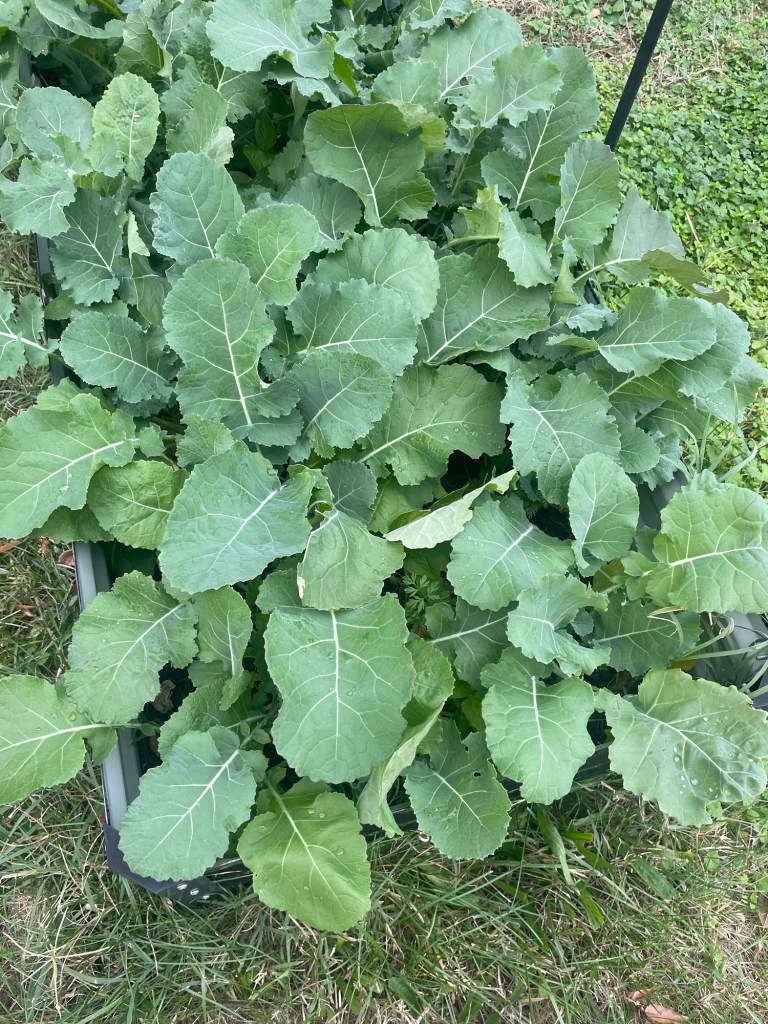
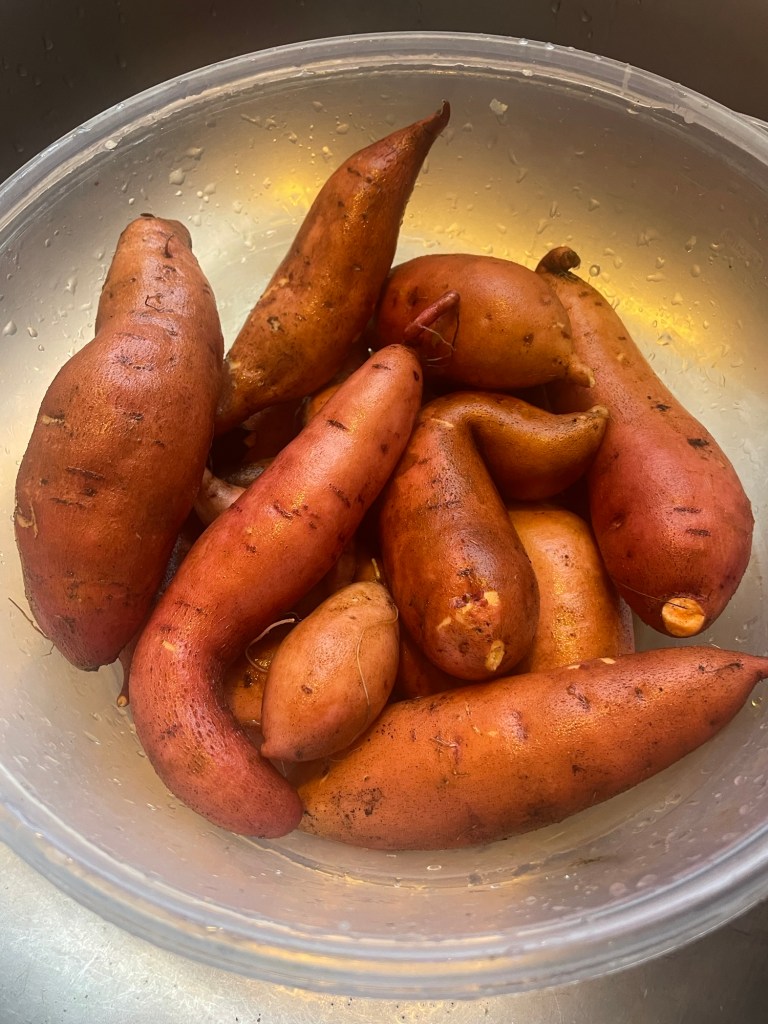
My fall garden is thriving with collard greens, steak tomatoes, carrots, russet potatoes, sweet potatoes, green beans, basil, cucumbers, beets, cabbage, and bell peppers. Each plant, in its own way, reflects where I am in life right now — steady, persistent, and learning to flourish through transition.

If you’re curious about what I’m using, you can find the same ones here:


🍅 Seeing Progress, Feeling Peace

Some beds are overflowing, while others are still finding their rhythm. My tomatoes have begun to climb again, pushing through the last warm days of fall, while the sweet potato vines spread like soft green blankets over the soil.

I’m grateful for every small sign of progress — every new leaf, every bit of green pushing through the dirt. These moments remind me that growth isn’t always loud or immediate. Sometimes, it’s simply about showing up, watering consistently, and letting time do its work.


🌸 The Beauty Beyond the Harvest

Beyond the vegetables, my flowers have been putting on their own quiet show — bursts of color that make me stop and smile, even on busy days.

These blooms remind me to look beyond productivity and yield — to appreciate the peace that comes from simply being outside, hands in the soil, surrounded by the hum of life.


🌿 Gratitude for the Process

Out here, I feel still. I can hear my thoughts soften. The garden gives me space to reflect on my days — the challenges, the growth, and the gratitude that anchors me.

Even when I’m pulling weeds or pruning back overgrown vines, I feel thankful — thankful for the quiet moments, the lessons in patience, and the sense of peace that only nature can offer.

Every bed, every leaf, every bit of soil carries a small prayer of hope — that what I nurture now will one day feed me and my family, not just in body but in spirit.


💭 Reflection Prompt for Readers

Take a moment this week to step outside — even if it’s just your porch, a park, or your own small garden.
What’s one thing in nature that reminds you to slow down, feel grateful, or keep growing?

Share your reflections in the comments — I’d love to hear what brings you peace this season. 🌸

Book Club

October Book Club | Reflections on The Untethered Soul by Lulu Lee

📚 October Book Club: Reflections on The Untethered Soul by Michael A. Singer

🌸 Discovering The Untethered Soul

Every so often, a book finds you exactly when you need it most. For me, that book was The Untethered Soul by Michael A. Singer. I picked it up during a season when I was craving peace — not the kind that comes from everything being perfect, but the kind that comes from acceptance, presence, and release.

This book isn’t about fixing yourself; it’s about learning to let go — to release old pain, quiet the constant noise of the mind, and step into a state of inner freedom. Singer invites us to see our thoughts and emotions as passing experiences, not permanent truths. The more we allow them to flow without resistance, the more peace we uncover within ourselves.


📖 A Brief Summary

In The Untethered Soul, Michael A. Singer explores what it means to truly be free — not just externally, but internally. Through gentle wisdom and practical insight, he guides readers to recognize the voice inside their head, observe it without judgment, and stop identifying with it as their “self.”

He teaches that true peace doesn’t come from controlling life, but from surrendering to it. By loosening our grip on pain, fear, and expectation, we can begin to live with open hearts and unshakable calm — no matter what’s happening around us.

You can find the book here:
👉 The Untethered Soul by Michael A. Singer on Amazon
🎧 Also available as an audiobook on Audible for those who prefer to listen.


🌿 My Reflection: Learning to Let Go

Reading this book has been a turning point in my healing journey. It’s helped me see that holding onto old pain only keeps me stuck in the same patterns — replaying stories that no longer serve me. Singer’s words reminded me that peace isn’t something to chase; it’s something we uncover once we stop resisting life as it unfolds.

I’ve started noticing my thoughts more — catching myself before getting swept away by worry or judgment. When I feel tension rising, I pause, breathe, and remind myself to soften, to let it pass through.

This practice has changed how I move through each day. Whether I’m journaling before bed, running in the early morning light, or tending to my garden, I carry this quiet awareness:
I am not my thoughts. I am the one who observes them.

That realization alone has brought me so much freedom.


🌼 How It’s Helping Me Grow

Healing is not about erasing the past; it’s about learning to hold it gently, without letting it define who you are now. The Untethered Soul has helped me make peace with what once felt heavy.

I’m learning that growth isn’t always about doing more — it’s often about releasing what no longer belongs. Just like in my garden, I’ve learned to prune back what’s overgrown, to make room for new life.

The more I release, the lighter I feel — and the more space I have for joy, creativity, and stillness.


💭 Reflection Prompt for Readers

Have you ever read a book that arrived in your life at just the right time?
What lesson or truth from it helped you let go, grow, or find peace within yourself?

Share your reflections in the comments — I’d love to hear what stories are helping you heal and bloom. 🌿

Health & Fitness · Health & Fitness

Reclaiming My Health: A Journey Back to Myself

🕊️ Reclaiming My Health: A Journey Back to Myself

For as long as I can remember, being active has been part of who I am. I loved the rhythm of movement — the way running clears my head, the way a good stretch makes me feel strong and centered. But somewhere along the way, life shifted.

Motherhood, work, and injury quietly rearranged my priorities. My days filled up with responsibilities and fatigue, and what used to be a daily ritual of self-care slowly became something I did “when I had time.” For years, that time never came.

Then, I lost my mother to complications related to diabetes.
Her passing shook me to my core. It forced me to look closely at my own health — not from a place of guilt or vanity, but from love. I wanted to live fully and care for myself the way she always wanted to.


🏃‍♀️ Finding My Way Back

In the months that followed, I made a promise to myself: to honor my body the way I once did, and to build a sustainable routine — not a punishment, but a lifestyle.

Now, I try to run at least three days a week. Those runs have become my moving meditations — a space to breathe, think, and heal. On alternating days, I lift weights, focusing on strength and endurance. Sundays are my rest days, a gentle reminder that recovery is just as sacred as effort.

Movement has become my anchor again — not a chore, but a celebration of what my body can do.


🍎 Nourishing from the Inside Out

For years, I had a complicated relationship with food. I often ate for comfort, for escape, or out of habit — rarely out of intention. But as I began to move more mindfully, I also started to eat that way.

I gave up meat and dairy and began to focus on foods that truly energize me — fruits, vegetables, grains, and plant-based proteins. I don’t chase perfection; I simply choose what makes me feel vibrant and alive.

Eating this way has taught me to listen — to my body, to my cravings, to my emotions. Food no longer feels like an enemy or a reward. It feels like care.


🌸 Rest as Resistance

One of the biggest lessons I’ve learned is that rest is not laziness — it’s necessary. Between work and motherhood, I’ve learned to carve out small pockets of peace. A long, relaxing bath three times a week has become my favorite ritual. It’s where I reflect, release tension, and reconnect with myself.

I also take time to journal before bed, even if it’s just a few lines. Writing helps me empty my thoughts and end the day with gratitude instead of worry. Some nights I write about what challenged me; other nights, I jot down what made me smile. Either way, it’s a gentle exhale before sleep — a way to honor my growth, my grief, and my progress.

If you’d like the same journal I use, you can check it out here: Spiral Notebook – 3 Pack A5 Ruled Journal

Those quiet moments — the bath, the pages, the silence — remind me that I’m more than the roles I play. I’m a whole person, deserving of rest, joy, and softness.


🌿 Moving Forward

This journey isn’t about perfection. It’s about consistency, grace, and gratitude. Each run, each meal, each journal entry, and each quiet bath is a reminder that I’m still here — choosing life, choosing strength, choosing myself.

If you’re reading this and trying to find your way back, start small. Take a walk. Drink more water. Eat something green. Write down what you’re grateful for. Rest when you need to. You don’t have to do it all — just begin.


💭 Reflection Prompt for Readers

What’s one small way you can honor your body or your peace this week?

(Leave a comment — I’d love to hear your journey.)

Recipes

🍩 African Cake Donuts

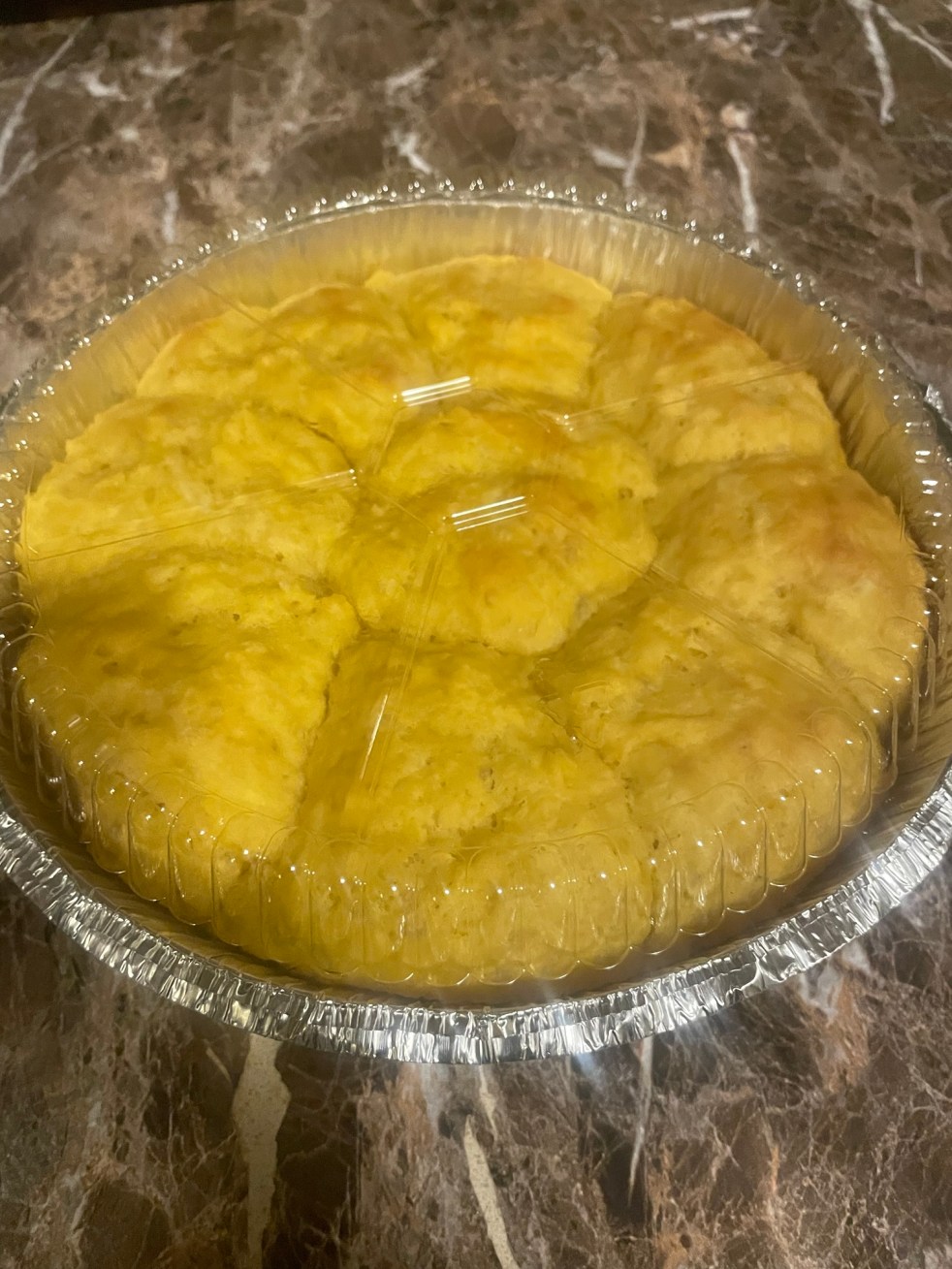
There’s something magical about donuts—the smell of warm oil, the golden crust, and that first sweet bite. But these African cake donuts are more than just a treat. They offer a little taste of tradition with a modern twist.

These donuts are made with creamy coconut milk. They have a touch of ginger and a hint of cardamom. They are light, flavorful, and irresistibly good. They’re easy to make, don’t require yeast, and will fill your kitchen with the most comforting aroma.

🥥 Ingredients

  • 2 cups all-purpose flour
  • ½ cup sugar
  • 2 tsp baking powder
  • ½ tsp salt
  • ½ tsp ground nutmeg
  • ½ tsp ground ginger
  • ¼ tsp ground cardamom
  • 2 large eggs
  • ½ cup coconut milk (canned, well-shaken)
  • 2 tbsp melted butter (or neutral oil)
  • Oil for frying

👩🏾‍🍳 Instructions

  1. In a large bowl, whisk together the flour, sugar, baking powder, salt, nutmeg, ginger, and cardamom.
  2. In a separate bowl, beat the eggs, coconut milk, and melted butter until smooth.
  3. Combine wet and dry ingredients. Mix gently until a thick batter/dough forms. (Do not overmix.)
  4. Heat oil in a deep pan over medium heat.
  5. Drop small scoops of dough into the hot oil, frying in batches.
  6. Cook until golden brown on all sides, turning as needed.
  7. Drain on paper towels and serve warm.

📝 Recipe Card (Printable)

African Cake Donuts with Coconut Milk, Ginger & Cardamom
Ingredients:
- 2 cups all-purpose flour
- ½ cup sugar
- 2 tsp baking powder
- ½ tsp salt
- ½ tsp nutmeg
- ½ tsp ginger
- ¼ tsp cardamom
- 2 large eggs
- ½ cup coconut milk
- 2 tbsp melted butter
- Oil for frying
Instructions:
1. Mix dry ingredients.
2. Mix wet ingredients.
3. Combine to form dough.
4. Fry in hot oil until golden brown.
5. Drain and serve warm.


🌟 Why This Recipe Works

Coconut milk makes the donuts soft and slightly rich.
Ginger adds warmth and a gentle spice.
Cardamom gives a subtle floral note that pairs beautifully with the sweetness.


💡 Tips for Success

  • Keep oil temperature steady (around 350°F / 175°C).
  • Fry in small batches for even cooking.
  • Dust with powdered sugar or drizzle with honey for extra flavor.


✨ Final Thoughts

These African cake donuts are easy enough for a weekday snack. They are special enough to share at family gatherings. They’re warm, sweet, and full of comforting flavors.

Book Club

Spotlight on a Poem: Together

The power of words

When I write, I am not alone. My words are carried by voices that came before me—the ancestors, the marchers, the mothers, the dreamers. Every poem I create is born out of this truth: we do not endure in isolation, but together.

One of the poems in my upcoming collection is titled “Together.” It’s a piece that reminds me how survival has never been the story of one, but of many. It weaves memory, history, and the shared strength that has allowed us to move forward as a people.


An Excerpt from “Together”

From the villages of our ancestors,
from the ships that tried to swallow us,
from the fields and the cities,
the marches and the prayers—
we have endured.


The Story Behind the Poem

I wrote “Together” while reflecting on the continuity of struggle and resilience. I thought about how the past lives in us. The journey from the shores of Africa to the present day has been marked by unimaginable trials. It has also been marked by courage and faith.

This poem came to me as a chorus of voices, echoing across time. It’s about remembering that our strength is collective, that we’ve always leaned on one another, even in the darkest moments.


Why This Poem Matters

“Proud” marked the beginning of my journey into poetry. “Together” represents what I’ve come to understand more deeply over time. Survival is not just individual. It is communal. We are bound by shared memory, and it is in that binding that we find resilience.

In my collection of 40 poems, each piece speaks to a different facet of that legacy—pain, defiance, beauty, survival. But “Together” is one of the poems that most clearly says: we are still here.


A Journey Shared

This poem, like the others, is part of a larger journey toward wholeness. It reminds me that writing is not only a personal act. It is also a communal offering. It serves as an invitation to remember, to heal, and to celebrate resilience.

I hope “Together” resonates with you as much as it does with me. I invite you to stay with me. I will continue sharing these poems. One story, one heartbeat, at a time.

Gardening · Gardening

🌱 Starting My Fall Garden: Carrots, Greens & More


There’s something special about the shift from summer to fall. The air cools, the days get shorter, and the garden takes on a new rhythm. Today, I kicked off my fall planting season. I couldn’t be more excited to see how it all turns out.


My Fall Crops

I used three garden beds to start my fall crops this year. Here’s what went into the soil today:

  • 🥕 Carrots – A classic root crop that loves cooler weather.
  • 🍅 Steak Tomatoes – Big, juicy, and full of flavor—hoping for a late harvest.
  • 🥬 Beets – Earthy and nutrient-packed.
  • 🌿 Collard Greens – A Southern staple that thrives in the fall.
  • 🥬 Cabbage – Perfect for soups, slaws, and fermenting.
  • 🥔 Potatoes – Always satisfying to dig up at harvest time.
  • 🌶️ Bell Peppers – A pop of color and flavor for meals.
  • 🌱 Spinach – Quick-growing and versatile in the kitchen.

✨ Why Fall Gardening Excites Me

Fall is one of my favorite times to garden. The pests slow down, the heat isn’t so intense, and the harvests are hearty and grounding. Starting fresh beds always feels like a clean slate, full of potential.

This year, I’m especially excited about the greens—collards and spinach—and the challenge of getting good potatoes before the ground freezes.


💡 Tips I’m Following

  • Rotate crops so the soil stays healthy.
  • Keep mulch handy to protect against early frosts.
  • Water consistently—fall rains help, but don’t always come on time.
  • Be patient: cooler weather crops can take a little longer.

My raised beds


🌟 Final Thoughts

Every season brings new challenges and rewards. I can’t wait to see how these beds grow over the coming weeks. Gardening keeps me grounded, connected, and always learning.

👉 Have you started your fall garden yet? What are you planting this season?

Health & Fitness

🏃‍♀️ What I Learned Training for My First Half Marathon

When a former classmate convinced me to sign up for my first half marathon, I didn’t exactly think it through. I only had about a month to prepare. I was cocky back then. I figured, “I’ll be fine.” Spoiler alert: I wasn’t. At least, not in the way I thought.


🏅 Race Day: The Wake-Up Call

Race day came, and I barely slept the night before. Still, I laced up my shoes and got my family out the door so they could cheer me on. My first half marathon was the Marine Corps Historic Half, and the energy at the start line was electric.

The first few miles felt amazing—I actually believed I could finish in around 2 hours and 30 minutes. But then came the hills. Big ones. Hills I hadn’t prepared for.

“Hospital Hill felt like Mount Everest after mile 10. I almost cried, but I kept moving.”

For those who have run the Historic Half, you already know that Hospital Hill is a monster. Trying to tackle it after 10 miles nearly broke me. I walked several times during that race—something I never planned on doing. By the end, I had lost a toenail. I could barely walk for days. I realized just how much I had underestimated what I signed up for.

And yet—I finished. And that finish line changed me.


💡 Lesson 1: Consistency Beats Confidence

My biggest mistake? Thinking confidence could replace training. I skipped workouts, ignored mileage, and assumed “being young and fit enough” would carry me through. Hospital Hill proved otherwise. Consistency, not bravado, is what builds endurance.


💤 Lesson 2: Rest Is Part of the Process

In my rush to train, I thought running hard every day would make me stronger. Instead, my legs were screaming by race week. Hospital Hill showed me that recovery is fuel. Rest isn’t laziness—it’s training.


🥗 Lesson 3: Nutrition Matters

By mile 9, I had nothing left in the tank. I hadn’t fueled properly, and it showed. That race taught me that food isn’t just fuel—it’s survival. Oatmeal, bananas, and water became my essentials for future runs.


🧠 Lesson 4: The Mental Game Is Everything

When my body wanted to quit, my mind had to take over.

“At mile 10, my legs were done. My mind had to run the race for me.”

Repeating mantras like “one step at a time” helped me push up Hospital Hill. Running is as much mental as it is physical. Another mantra that kept me going was, “pain is weakness leaving the body”. Something I picked up from my Drill Sergeants back in the day. The body can do almost anything your mind wills it to.


👟 Lesson 5: Gear Can Save You

Blisters, sore feet, and losing a toenail taught me the hard way that the right shoes and socks matter. Gear can’t do the running for you, but it can make the journey bearable. Back then I wasn’t wise enough to know that your shoe size for running matters. I was naive about running shoes. I didn’t know that long-distance runners need to get their shoes 1/2 size larger than their regular everyday shoes. I learned that lesson the hard way and I had to learn it again…apparently I didn’t learn it well enough the first time.


🎉 Lesson 6: Celebrate the Finish—Even If It’s Messy

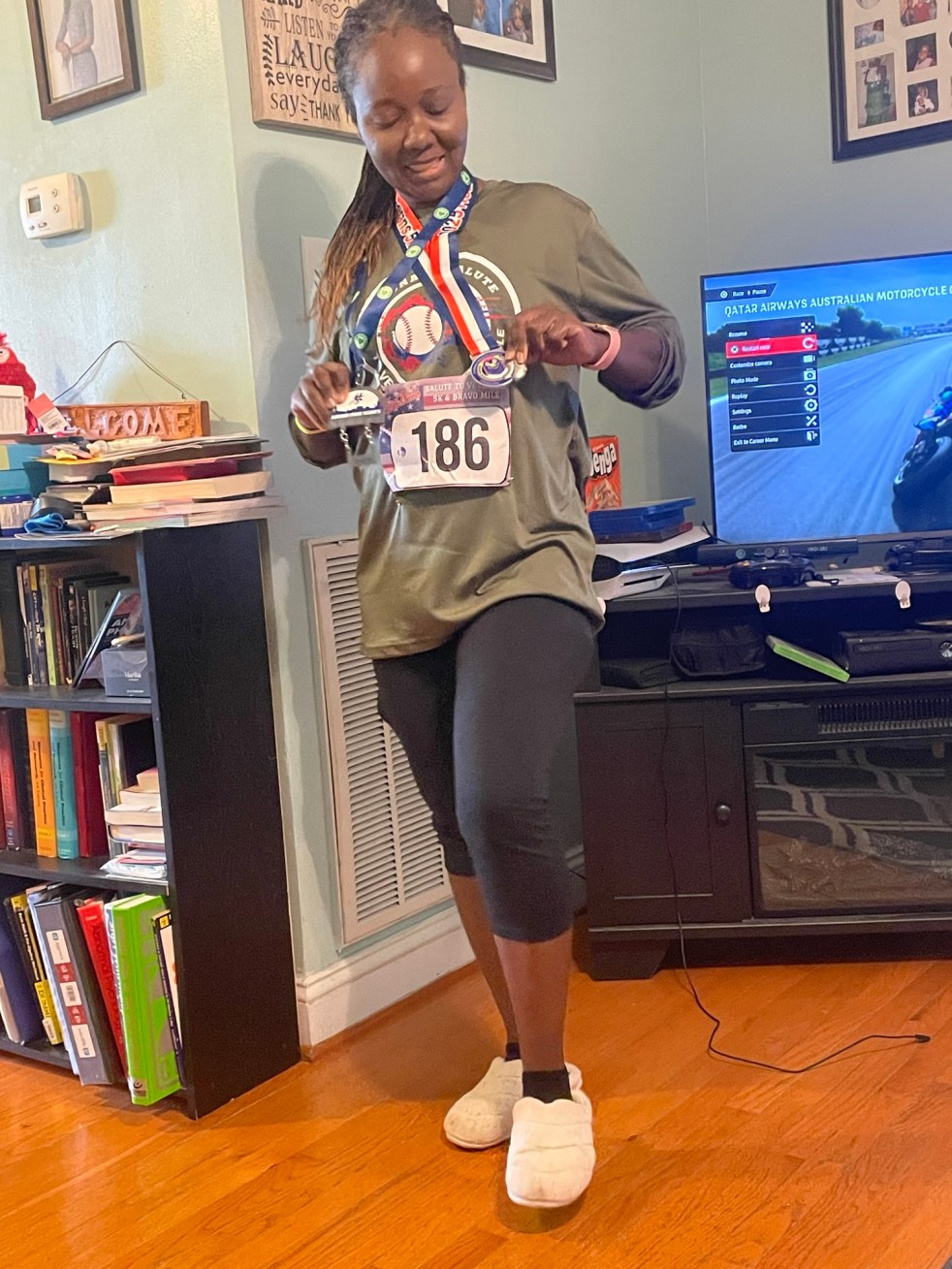
By the time I crossed the finish line, I wasn’t running—I was surviving. But I finished. That medal means more to me than any “perfect” run ever could. One of my favorite memories from that race is the picture I took with my family at the finish line. I also remember thinking that I wanted to run that race again immediately after I crossed the finish line. I can’t explain it but most long distance runners will tell you that.


✨ Final Thoughts

My first half marathon humbled me, but it also transformed me. I went in overconfident. I was under-prepared. I came out with a new respect for the distance, for training, and for myself.

If you’re thinking about running your first half marathon, here’s my advice:

  • Train smart.
  • Give yourself time.
  • Respect the distance.

And if your race doesn’t go perfectly? Celebrate anyway. Every finish line is a victory.


💬 Your Turn: Have you ever jumped into a challenge unprepared? Drop your story in the comments—I’d love to cheer you on!